H.O.W.L. Transition Program
The H.O.W.L. Transition Program provides the A-State experience to students with intellectual/developmental disabilities and/or autism. The H.O.W.L. Transition Program also provides supports to students who may need:
Mentoring
Social Skills
Career Planning
Independent Living Skills
Academic Support
Students engage in experiences that enrich and enhance educational, social and interpersonal skills to achieve their individual aspirations.
- Who is Eligble?
- H.O.W.L. Certificate of Achievement Minimum Requirements
- Cost
- Hear first-hand from students why you should be a H.O.W.L. Transition Program student!
- Living Accomodations
- Location & Contact Information
- Living Accommodations
- Life Skills Learned in the H.O.W.L. Transition Program
- Anticipated Outcomes
- Curriculum
Who is Eligble?
Candidate Requirements
To be eligible for the H.O.W.L. Transition Program, a candidate must meet the following requirements:
- Function without attendant care for personal needs.
- Independently and accurately manage and administer their own medications.
- Ability to independently communicate basic needs and wants.
- The applicant must have an identifiable (e.g., IEP, psychoeducational report: must have been conducted within the past two years) intellectual disability and/or autism.
- The age range of students to be accepted is approximately 18 – 26 years of age.
- The applicant must be free of any communicable diseases that are transmissible by causal contact and all immunizations must be up to date. He or she must have health insurance.
- The applicant must have received a diploma or certificate of completion or equivalent from a high school program.
- The applicant must be able to live on campus.
- The applicant must possess enough self-help skills and responsibility to safely and independently function in his/her apartment with minimum to no supervision during all program hours.
Required While in Program
- The applicant must have acceptable social behavior, verified by previous schools, family, and/or agency personnel as well as the ability to get along with peers, follow rules, and accept supervision.
- The applicant must be willing to attend all hours of instruction a week, as well as the supported learning during after-hours and weekends.
- The applicant must have a strong desire to complete the program and live independently.
Who is Eligible?
Intellectual Disability
The Department of Education at Arkansas State University (A-State) will provide students with intellectual disabilities (ID) an inclusive college experience. Intellectual disability is defined by the Higher Education Act as:
A student—
(A) With a cognitive impairment, characterized by significant limitations in—
- intellectual and cognitive functioning; and
- adaptive behavior as expressed in conceptual, social, and practical adaptive skills; and
(B) Who was formerly, eligible for a free appropriate public education under the Individuals with Disabilities Education Act (IDEA).
Autism Spectrum Disorder
In addition to students with ID, The Department of Education at Arkansas State University (A-State) will provide students with Autism Spectrum Disorder (ASD) social and vocational support through the HOWL Program.
A student with ASD is described as:
(A) Having a current medical diagnosis of Autism Spectrum Disorder (ASD) with significant limitations in–
- adaptive behavior as expressed in conceptual, social, and practical adaptive skills;
- and who was formerly, eligible for a free appropriate public education under the Individuals with Disabilities Education Act (IDEA).
H.O.W.L. Certificate of Achievement Minimum Requirements
Satisfactory Academic Progress
Satisfactory Academic Progress (SAP) will be determined using a person-centered planning approach. For ASD students who are enrolled in their degree coursework for credit, satisfactory progress will be determined by satisfactory grade point average (GPA), as required for all students of a 2.0 GPA, plus satisfactory performance in work internships (with a rating of at least “Expected Progress” on their internship goals). For students who are enrolled in their classes on an audit basis, the goals will be determined and agreed upon for each student through the collaboration of the student, the student’s professors, and the campus coordinator staff. A rubric will be used to identify and quantify the student’s goals and progress for each course.
Certificate of Achievement
To obtain a H.O.W.L. Certificate of Achievement, a student must complete the following minimum requirements.
48 Hours of Coursework – either taken for credit or audited. If courses are audited, modified assignments tied to both course content and specific career and or life goals must be included. Course of study (48-hour program) will be individually determined in relation to student goals. For students who are auditing, satisfactory academic progress will be measured by performance on individually modified assignments. HOWL professional staff will work in collaboration with course instructors to modify course assignments, so as not to create additional responsibilities for faculty.
Minimum of two supervised internships related to career goal. Internships can be paid or non-paid.
Student portfolio of accomplishments is required for completion of HOWL. Portfolio will include examples of assignments or projects for courses taken for credit; modified course assignments or projects for audited classes; examples of skills obtained through internships; and may also include examples of leadership or service learning activities on campus or in the community, extra-curricular involvement, etc.
Cost
Estimated Costs
The following table is an estimate of the annual cost of the H.O.W.L. Transition Program. Other fees may apply. For full updated A-State tuition and fees visit the tuition and fees page.
Cost
|
Tuition |
$1,890.00 |
|
Fees |
$812.00 |
|
Housing |
$2,550.00 |
|
Meals |
$1,670.00 |
|
Incidentals |
$900.00 |
|
H.O.W.L. Fee |
$5,000.00 (per semester) |
|
TOTAL |
$12,822.00 |
Hear first-hand from students why you should be a H.O.W.L. Transition Program student!
Hear first-hand from H.O.W.L. students:
https://vimeo.com/1129585066/ec66c9ed2e?share=copy&fl=sv&fe=ci
Living Accomodations
Location & Contact Information
Location: 330 University Loop, College of education Building, Room 110
Phone: (870) 972-2000
Email: howltp@AState.edu
Living Accommodations
Students in the H.O.W.L. Transition Program can live in the follow areas:
University Hall
is located on Dean Street just a few steps away from the Reng Student Union. University Hall is home to first-year females on different floors in the five-story building. It
requires card access to enter the building, and is made up of suite-style living quarters. The main lobby features a large screen television and numerous seating areas. The residents of University Hall have access to a spacious main lobby, a newly renovated suite area to work out, a suite lounge area called The Den, 24-hour study lounges, two kitchens, and a laundry room.


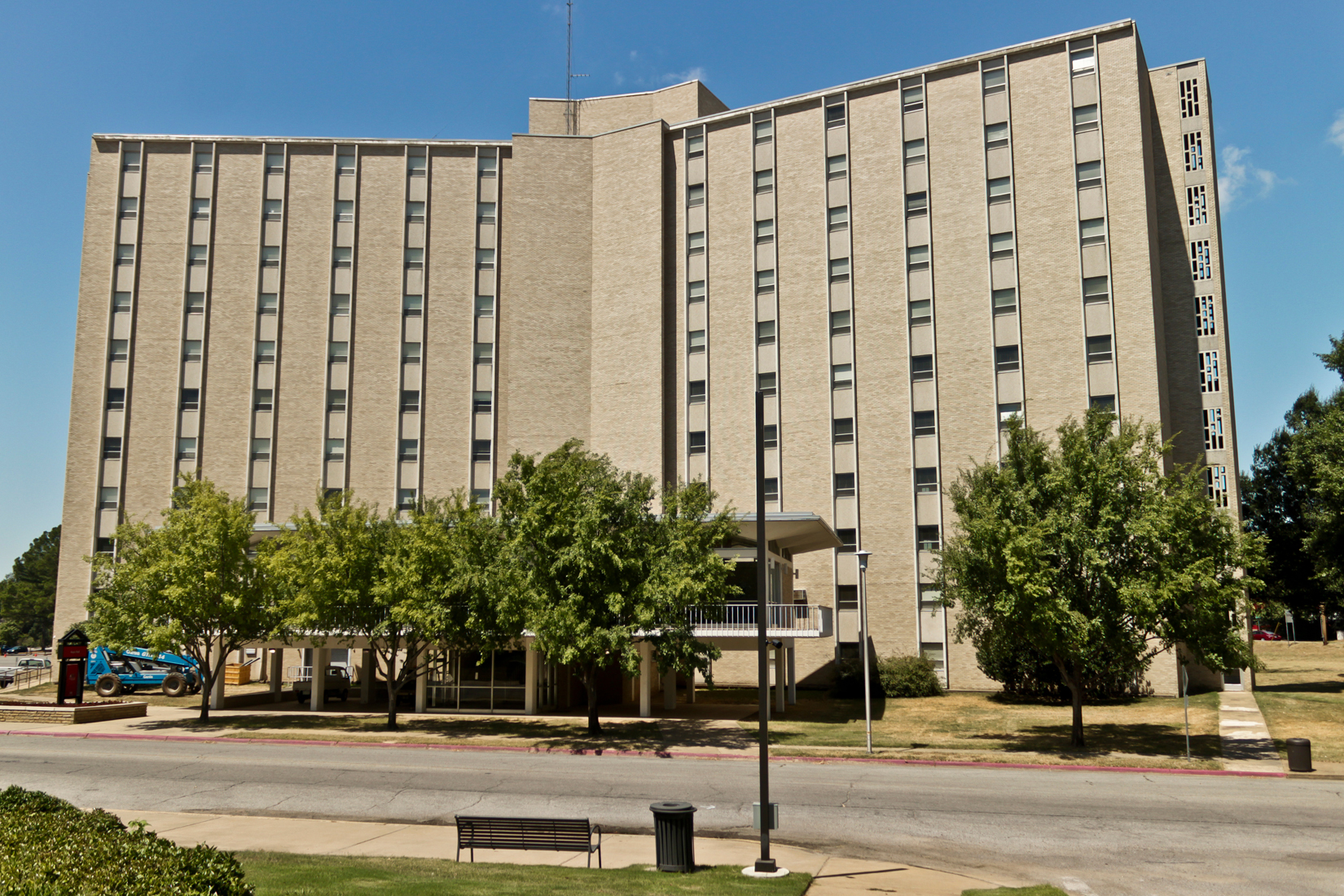
Kays Hall
is located on Dean Street just a short walk from the Reng Student Union. Kays is home to first-year males and females on different wings of the eleven-story building.
Kays Hall requires card access to enter the building and to enter the separate wings of each floor.
Kays is made up of suite-style living quarters and single rooms. The single room provides students the opportunity
to have their own room with a shared bathroom space. The main lobby features a large screen television, ping pong, air
hockey and pool tables.
The residents of Kays Hall have access to a spacious main lobby, floor lounges, a central kitchen, a first floor laundry room, and a newly renovated lounge space on the 2nd floor.
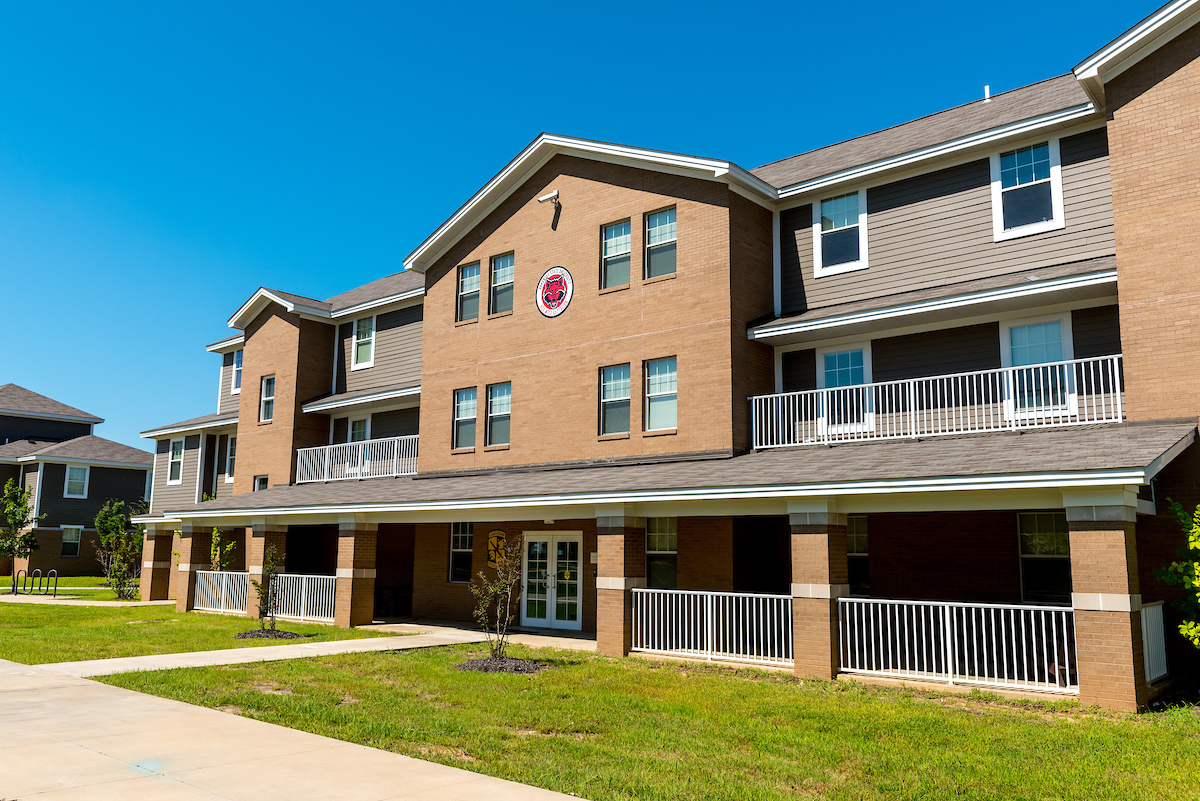
The Living Learning Community 3
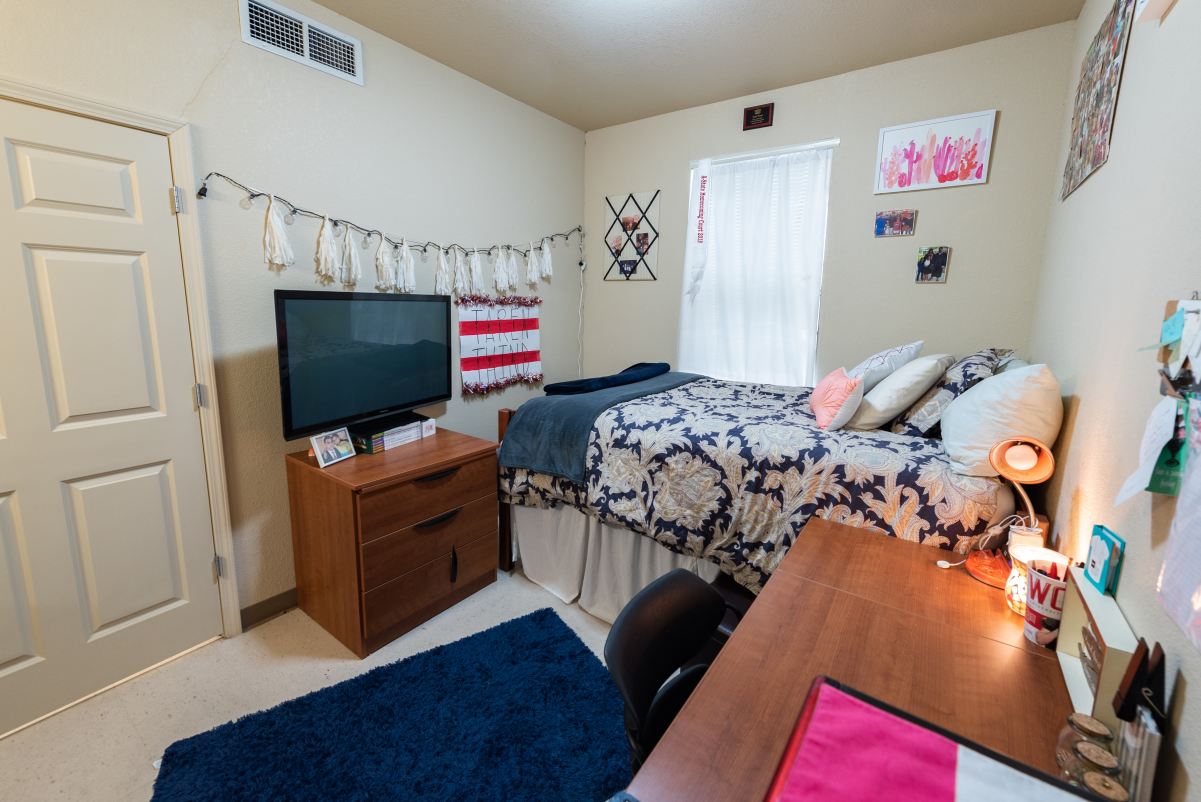
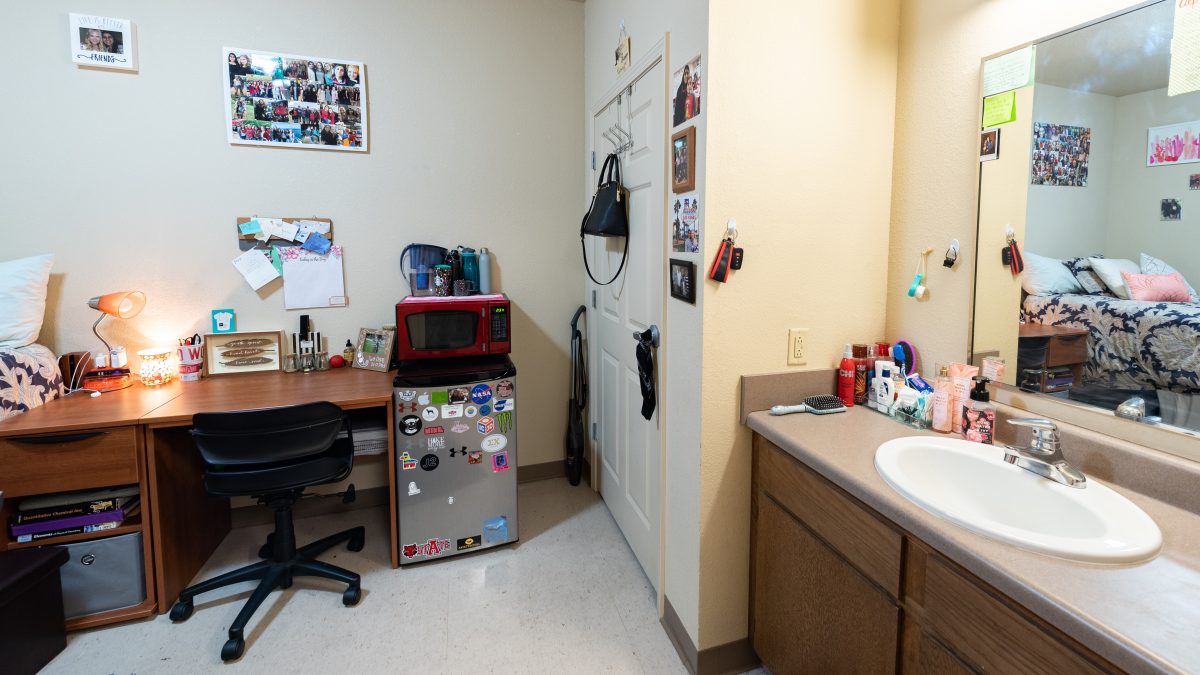
is located on Danner Ave. conveniently located between the Carl R. Reng Student Union and the Red Wolf Center. This co-ed residential building is home to students of all classifications. The building is made up of suite-style living quarters with single and double rooms. The residents have access to the floor lobby, lounges, and a laundry room in their own building.
Life Skills Learned in the H.O.W.L. Transition Program
The H.O.W.L. (Helping Our Wolves Learn) Transition Program provides supports to students with intellectual and developmental disabilities (IDD) and/or autism including mentoring, social skills, career planning, independent living skills, and academic support. Students engage in experiences that enrich and enhance educational, social and interpersonal skills to achieve their individual aspirations.