Weather Preparedness and Response
- Severe Weather Preparedness
- Campus Severe Weather Damage Report
- Winter Weather Preparedness
- Current Weather at A-State
- StormReady University
- Watch Our StormReady Announcement Video
- Learn About StormReady Communities
- StormReady Reaccreditation
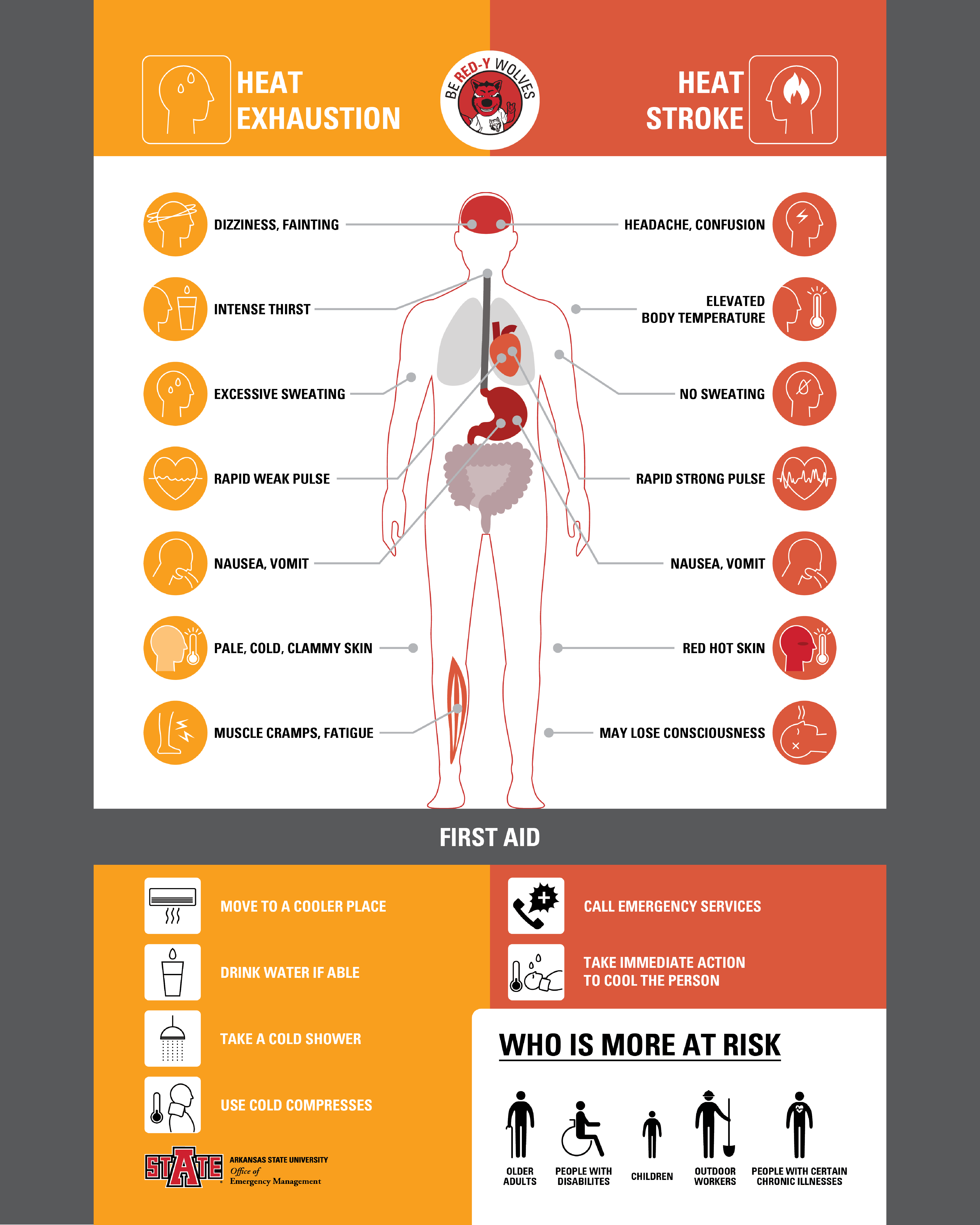
- Extreme Heat Graphic
Severe Weather Preparedness
To view our Severe Weather Preparedness Tips, click here: Severe Weather Preparedness Tips
To view the Severe Weather Resource LinkTree, click here: A-State Severe Weather LinkTree
To view the Severe Weather Preparedness Video, click here: A-State Weather Preparedness Video
----------------------------------------------------------------------------------------------------------------
Preparedness Tools
A-State Alerts are the primary way for campus emergency officials to communicate weather emergencies. These text messsges to your mobile device include class cancellations, tornado warnings, all-clear statements, and other forms of hazard communication. These alerts are specific to the physical A-State campus.
Sign up for A-State Alerts:
1. Log on to my.AState
2. Click on “Emergency Alert Setup”
3. Enter up to 3 phone numbers
4. Hit confirm
National Weather Service Memphis issues all weather related watches and warnings for campus. Craighead County and the city of Jonesboro are part of the NWS Memphis coverage area.
- Twitter: @NWS Memphis
- Facebook: US National Weather Service Memphis Tennessee
Wireless Emergency Alerts: WEA alerts are sent via phone towers, and broadcast on mobile devices in certain situations (such as a tornado warning). These are issued whenever the tower the phone is using is located within the warning polygon. Check your phone settings to ensure emergency alerts are on.
NOAA Weather Radio: These radios can be programmed to your county area and can also be programmed by the user to only broadcast the types of alerts you want to be notified about. They are relatively inexpensive (around $35) and offer great redundancy since they are not reliant on internet and have a battery backup.
What To Do:
Tornado Watch: When a tornado watch is issued, it means all ingredients are present for potential tornadoes. However, at this point, the ingredients have not yet combined.
- Monitor weather using mobile weather apps and the National Weather Service.
- Identify where you’ll be, where you’ll go and what you’ll do if severe weather approaches
- As weather approaches, move to safe areas. For campus, the designated safe area is the Reng Student Union. Note: the window of opportunity to change buildings is during a watch. Once a warning is issued, it may not be safe to leave a building.
Tornado Warning: When a tornado warning is issued, it means ingredients have started combining and rotation is visible. This rotation may be on the ground (tornado), but it may also be rotating within the clouds (funnel cloud). Rotation is often identified using radar (radar indicated), which is why tornado warnings sometimes don’t produce a tornado. However, if a warning is issued, it means that rotation is visible and has the potential of touching down.
- You should not move buildings – seek shelter at the building you are
currently in. - If driving, find the nearest sturdy building to seek shelter. Do not stay in the car, under an overpass or try and outrun the storm. Concrete culverts can also be a shelter point.
- Monitor via radio/mobile devices until the storm passes. Do not leave the shelter until you verify the threat has passed.
The difference between a watch and warning, pizza style:
| Pizza Watch | Pizza Warning |
| All the ingredients to make a pizza are present. | We're having pizza! |
 |
 |
Campus Severe Weather Damage Report
To view the damage reporting form, click here: Severe Weather Damage Report
----------------------------------------------------------------------------------------------------------------
This form is used to report storm damage and any available documentation (such as pictures) to the Arkansas State University Office of Emergency Management. For any questions, contact Wyatt Reed at wreed@astate.edu or (870) 972-3352.
These reports do not substitute the need to report major damage to appropriate personnel, such as University Housing or University Police.
Winter Weather Preparedness
Winter Weather Resources
To view our Winter Weather Preparedness Video, click here: A-State Disaster Preparedness Video
To view our Winter Weather LinkTree, click here: A-State Winter Weather LinkTree
Current Weather at A-State
StormReady University
Arkansas State is a certified StormReady University by the National Weather Service.
Watch Our StormReady Announcement Video
To view the StormReady video, click here: A-State StormReady Announcement
----------------------------------------------------------------------------------------------------------------
Learn About StormReady Communities
To learn more about StormReady, click here: StormReady Universities
----------------------------------------------------------------------------------------------------------------
StormReady Reaccreditation
To view the StormReady Reaccreditation Announcement, click here: 2025 StormReady Reaccreditation
----------------------------------------------------------------------------------------------------------------
|
A-State Recognized as 'StormReady' Campus by National Weather Service |
|
08/18/2025 |
|
JONESBORO – Just as students prepare to arrive at Arkansas State University for the start of the fall semester, the Office of Emergency Management is announcing its redesignation as a StormReady campus community. Reed said the university works to prepare campus staff, provide situational awareness, and decision-making support through weather briefings. Through these actions, they can accurately respond to severe weather hazards.
That plan has to be shared with and available to staff, faculty and students so they are fully prepared and ready for possible threats. This designation will expire in August of 2029.
“Another part of the designation requirements is assuring adequate methods are in place for receiving and relaying hazardous weather messages from the National Weather Service,” added Beal. |
Extreme Heat Graphic