Reviews
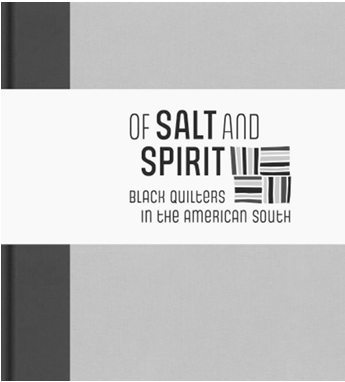
Of Salt and Spirit: Black Quilters in the American South. Edited by Sharbreon Plummer. (Jackson, Mis-sissippi: University Press of Missis-sippi, 2025. Pp. 168, 95 black & white and color illustrations. $40, hardcover)
Sharbreon Plummer introduces her edited
volume with Ashley M. Jones’s poem “I Cannot
Talk About the South Without Talking About
Black Women.” This poem is from her longer
work Reparations Now!, and it is the source for the
title of both this new publication and the travel-
ing exhibition that is the source of the book. “Of
Salt and Spirit” symbolizes the strengths of eld-
erly Black women, and this literary allusion is an
apt representation of the creativity that is so ev-
ident in this presentation of fifty-one quilts and
twelve portraits of quilters from an exhibit that
was curated from the Mississippi Museum of
Art’s collection. The color plates brilliantly illus-
trate a range of Black quilting styles, and various
essays by quilters and curators richly support this
beautiful book’s content.
Half of the quilts are from the collection of
Roland L. Freeman, many of which were in-
cluded in the museum’s recent exhibition that is
traveling through the region. Freeman was a pho-
tographer and folklorist, who was honored as a
National Heritage Fellow in 2007. Primarily a
documentarian, Freeman is well known for his
photographs of Civil Rights events—notably the
Mule Train procession—sites associated with nu-
merous communities’ daily and expressive life,
 and portraits of Black artists and musicians. One
of his most significant works is the massive work
A Communion of the Spirits: African-American
Quilters, Preservers, and Their Stories. Freeman’s in-
depth presentation of over 300 photos of dozens
of quilters from thirty-eight states reflects his life-
long love of quilts and quiltmakers. Freeman
passed in 2023, and the Mississippi Museum of
Art has graciously accepted and now houses his
personal collection of quilts, photographs associ-
ated with quilting, and his fieldnotes and se-
lected personal papers. Freeman’s impact from a
lifetime of documenting and preserving the leg-
acy of folk arts is a major element of this new vol-
ume’s appeal. Of Salt and Spirit includes tributes
and essays from Freeman’s friends and colleagues
that animate the book. The exhibit and the book
affirm his talent and the creative spirit that
emerges through viewing the quilts through his
camera’s lens as well as the images made by other
photographers that are part of the exhibit’s cura-
and portraits of Black artists and musicians. One
of his most significant works is the massive work
A Communion of the Spirits: African-American
Quilters, Preservers, and Their Stories. Freeman’s in-
depth presentation of over 300 photos of dozens
of quilters from thirty-eight states reflects his life-
long love of quilts and quiltmakers. Freeman
passed in 2023, and the Mississippi Museum of
Art has graciously accepted and now houses his
personal collection of quilts, photographs associ-
ated with quilting, and his fieldnotes and se-
lected personal papers. Freeman’s impact from a
lifetime of documenting and preserving the leg-
acy of folk arts is a major element of this new vol-
ume’s appeal. Of Salt and Spirit includes tributes
and essays from Freeman’s friends and colleagues
that animate the book. The exhibit and the book
affirm his talent and the creative spirit that
emerges through viewing the quilts through his
camera’s lens as well as the images made by other
photographers that are part of the exhibit’s cura-
tion. Freeman was also a quilter, himself, and it
is reassuring to know that his own work is valued
and preserved through the museum’s collection.
Of Salt and Spirit is a beautifully crafted book.
Entries by Sharbreon Plummer, Lauren Cross,
and the museum’s director, Betsy Bradley, intro-
duce the volume and the art work presented be-
tween its covers. The photographs are arranged
into five sections: Homecoming, The Gathering,
Aesthetics of Place, Bond by Love, and Keepers
of the Cloth. Excerpts from the writing of Alice
Walker, Toni Morrison, and bell hooks introduce
various sections as epigraphs that are then devel-
oped in written commentary and through the
photographs of quilts featured in the exhibit. The
themes are well chosen, and the photographs’
patterns and imagery open new insights and re-
flections that evoke the depth of this artistic ex-
pression. It is a book to be enjoyed on an initial
reading and then savored with additional view-
ings. The black and white photographs and color
plates of quilts and quiltmakers vividly convey
the artworks’ vibrancy, and quilt aficionados will
recognize a range of patterns and styles such as
string quilts, yo-yo quilts, and story quilts. The
curators take special care to avoid monolithic in-
terpretations through loaded terms that are too
facilely used to portray the art as primitive or im-
provisatory, and their commentary along with
the quilts breaks stereotypes about Black aes-
thetic values.
Although most of the artists are known pri-
marily within their own families and commu-
nities, a number of the quiltmakers have received
major recognition and have had their work pre-
sented in various exhibits and publications. Most
of the artwork is presented with minimal contex-
tual information as the accompanying text re-
flects the content and style of preparing the
museum labels that are part of the exhibition.
Those interested in more information on the art-
ists themselves can find biographical information
on some of the quilters in the writing of Freeman
and other quilt researchers. The past half-century
has seen a burgeoning of interest in quilt doc-
umentation, as well as scholarship on the art,
and the book serves as an excellent entry point
for subsequent inquiry into this engaging art
Quilt making, in general, and quilt making
by Black quilters, in particular, is featured in a
wealth of scholarship and clearly serves as a re-
source for Of Salt and Spirit, but this book would
have been burdened down with much more
written commentary and arcane scholarship. The
emphasis on the artistry that emerges through
the photographs of quilts reflects the persepctive
and values inherent in curating a museum ex-
hibit. Whether or not objects can speak for them-
selves is a moot point, but it is clear that the
editors, contributors, and designers of this won-
derful publication have been inspired to create a
wonderful representation of richness of expres-
sion that emerges both through historical quilts
as well as in the manifestations of creative expres-
sion found in contemporary quiltmaking. It is to
the credit of the Mississippi Museum of Art that
they have also developed a traveling exhibit on
these quilts. Viewing the actual quilts will ob-
viously animate how Of Salt and Spirit engages
readers with the artistic traditions. The book will
serve as an excellent accompanying publication
for those who have viewed the exhibit. It also
stands by itself as an excellent presentation of the
quilts.
--Gregory Hansen
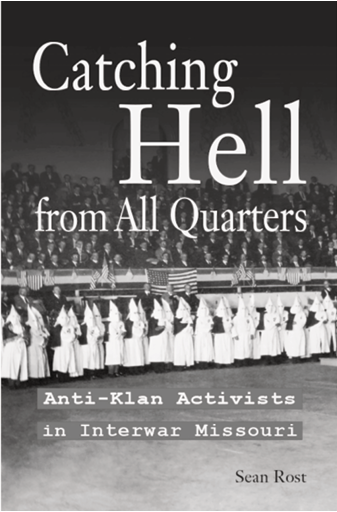
Catching Hell from All Quarters:
Anti-Klan Activists in Interwar
## Missouri
. By Sean Rost. (Columbia,
Missouri: University of Missouri
Press, 2025. Pp. xvi + 387, list of il-
lustrations, preface, acknowledg-
ments, notes, bibliography, index.
$55, hardcover)
Half a lifetime ago I was researching in Chi-
cago’s fabulous Newberry Library and came
upon a book compiling names and descriptions
of the incredible number of secret societies in the
post-World War One United States. My interest
stemmed from working on an article on the var-
ied forms labor organizations historically have
taken, some of them secret societies. I expected
to encounter in the volume the Ku Klux Klan
(KKK), which some historians estimate to have
had five million members at its postwar height.
It was there, along with a wide range of kindred
groups and spinoffs. One expert cited in Catching
Hell from All Quarters reckoned there were 800
far-right groups like the Klan at one point in the
1930s. What was unexpected in that old volume
was a staggering number of anti-Klan forma-
tions, by no means confined to the secular left
or the big cities.
Such groups have not gone unnoticed by his-
torians. To tell the story of the Klan itself, as sev-
eral classic studies have done, requires
consideration of its frequent defeats and there-
fore of its opponents. Anti-fascism has occupied
the attention of scholars and the fears of readers
increasingly. However, for the heyday of the mod-
ern Klan, the 1920s, there is very little rendering
of the history of the Klan from the vantage of the
study of its vanquishers.
 Thanks to Sean Rost we now do have an au-
thoritative history of anti-Klan coalitions in an
important battleground state, one where the
Klan recruited successfully and contested for po-
litical power within both the Democratic and Re-
publican parties. In choosing Missouri, Rost
opted for his home state. Indeed he reports that
his early interest in the subject was piqued by
learning of the resistance to bigotry of central
Missouri German Catholics, who counted
among their numbers Rost’s own ancestors, and
who were bulwarks against the anti-Catholic
KKK. His widening analysis treats the entirety of
the state, including especially the lead belt and
southwest Missouri more generally, the Bootheel
in the southeast, and the urban centers of St.
Louis and Kansas City. Since there is no full his-
tory of the Klan itself in Missouri, Rost had to
construct both parts of a sprawling story from the
ground. He establishes Missouri as an important
Thanks to Sean Rost we now do have an au-
thoritative history of anti-Klan coalitions in an
important battleground state, one where the
Klan recruited successfully and contested for po-
litical power within both the Democratic and Re-
publican parties. In choosing Missouri, Rost
opted for his home state. Indeed he reports that
his early interest in the subject was piqued by
learning of the resistance to bigotry of central
Missouri German Catholics, who counted
among their numbers Rost’s own ancestors, and
who were bulwarks against the anti-Catholic
KKK. His widening analysis treats the entirety of
the state, including especially the lead belt and
southwest Missouri more generally, the Bootheel
in the southeast, and the urban centers of St.
Louis and Kansas City. Since there is no full his-
tory of the Klan itself in Missouri, Rost had to
construct both parts of a sprawling story from the
ground. He establishes Missouri as an important
center of bigoted journalism, Klan recruitment,
and local KKK electoral successes but, in telling
contrast to nearby Indiana, meager successes at
securing political power statewide.
While Catching Hell treats the years between
the two world wars, and includes some impor-
tant post-1945 material, the drama is very con-
centrated in the 1920s. It is an account of wild
ups-and-downs. Rost’s title stems from a 1922
complaint in the sermon of a pro-Klan St. Louis
preacher, who portrayed his forces as much be-
leaguered. Within two years, the KKK seemed
poised to run the state. By the decade’s end, and
sooner in much of the state, it was defeated in
Missouri, though what Rost calls the “spirit of
the Klan” (p. 241) persisted in a variety of organ-
izations.
The spread of the Klan, and of opposition
to it, first centered on the press and Rost’s first
two chapters skillfully mine newspapers to cap-
ture the beginnings of the Missouri Klan and op-
position to it. Particularly incendiary and
theatrical was the anti-Catholic The Menace. Its
screeds, especially against the Knights of Colum-
bus (KoC), proved so popular that Aurora, Mis-
souri, was said to have gotten a second rail line
to ship in newsprint and ship out publications.
Opponents honed counter-arguments, especially
in the Catholic press, the Kansas City Call, and
the Jewish Chronicle.
The next three chapters concern the build-
ing and triumphs over time of anti-Klan organi-
zations, first in movements and then also in
political coalitions. Rost especially succeeds in
presenting the successes of Jewish, African Amer-
ican, and Catholic organizations in answering ar-
guments supporting hate. These groups,
including B’nai Brith, the National Association
for the Advancement of Colored People, the
KoC, the Universal Negro Improvement Associ-
ation, and the Catholic Central Verein, tended
to educate and mobilize separately, although
broad coalitions like American Unity League
came into being quickly. Politically, local coali-
tions to prevent or dislodge Klan control tended
to involve fragile cooperation among groups. Bey-
ond the local, Klan influence had to be com-
batted in both the major political parties. The
most powerful anti-Klan voice, Democratic Sen-
ator James Reed, illustrated the limits of coali-
tion, cherishing as he did both aspirations to be
President and positions alienating both feminists
and African Americans. A fifth chapter drama-
tizes the spectacular scandals that helped to dis-
credit the Klan both nationally and in Missouri.
It shows how anti-Klan forces capitalized espe-
cially on exposing the sex, violence, and graft ad-
hering to the KKK, and contrasting its record
with its pronouncements of moral rectitude.
Here Missouri proved central with Reed provid-
ing leadership into sensational US Senate inves-
tigations into the Klan.
The best-crafted chapter in Catching Hell, the
penultimate one, sits somewhat outside the struc-
ture of the book. Titled “Kampaigning,” it shows
how some Black political leaders in Missouri ex-
tended anti-Klan coalition activity to claim new
expanded roles in the Democratic Party. Portray-
ing the Republicans’ broken promises to Black
voters as amounting to “Lily-Whitism,” figures
like Kansas City’s Dr. William Thompkins could
bring anti-Klan coalition experience and claims
to a moral high ground into state politics and
could increasingly win Black voters to the Dem-
ocrats, even outside urban political machines.
Missouri became in this context a state in which,
Rost argues, the Black vote switched away from
Republican candidates before it did so elsewhere.
Catching Hell then closes with a chapter and an
epilogue detailing the fate of the Klan and Klan-
like organizations in the last 90 years in Missouri.
Highlights include the tracing of leading figures
in the book as they joined organizations led by
new generations of bigots, including Gerald L.K.
Smith and, ironically enough, the Catholic pri-
est, Father Charles Coughlin. Rost’s account of
the rise and fall of the German-American Bund
in Missouri just prior to World War Two is espe-
cially acute.
If there is a surprise in the book, it is the ab-
sence of the left and left-led unions in the ac-
counts of anti-Klan resistance. The brief
mentions of such forces are made in passing, for
example in the Congress of Industrial Organiza-
tions appearing in lists of broad mobilizations of
opposition to the German-American Bund and
in accusations that such coalitions included
Communists. In some cases, more might have
been done to unearth left and labor participation
in fighting the Klan. For example, the cross-bor-
der activism of the Southern Tenant Farmers
Union in the Bootheel featured defense of fellow
union members taking refuge from nightrider
terror in Arkansas. In St. Louis the important
Communist artist Joe Jones fought a protracted,
losing battle against the Klan to display radical
art in the city’s historic Old Courthouse in the
early 1930s, as Devin Thomas O’Shea’s research
has shown. Whatever other small additions
might be made along these lines, it must be said
that the absence of the labor left in the story does
not reflect lack of diligence on Rost’s part. In-
stead timing mattered. In the 1920s when the
main action of the book unfolded, labor was rel-
atively weak in Missouri and the significant con-
servative forces in the anti-Klan coalition were
unlikely to welcome left support. Rost’s excellent
work aptly shows the shape of that coalition.
--David Roediger
ststs
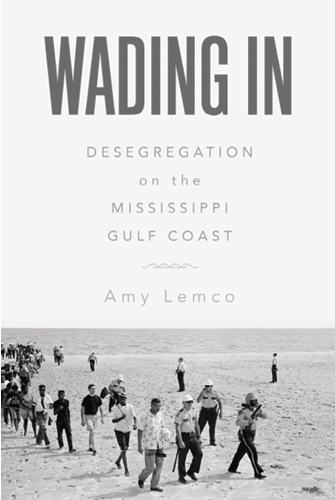
Wading In: Desegregation on the
Mississippi Gulf Coast
. By Amy
Lemco. (Jackson, Mississippi: Univer-
sity Press of Mississippi, 2023. Pp xii
- 187, preface, acknowledgments,
notes, selected bibliography, index,
$22.00, paper)
For decades, the historiography of the Mis-
sissippi Civil Rights Movement has prioritized
the Delta region. While seminal works such as
John Dittmer’s Local People and Charles Payne’s
I’ve Got the Light of Freedom rightly focus on the
brutal struggle for voting rights, the grassroots or-
ganizing of SNCC, and the inherent violence of
the plantation economy, this Delta-centrism has
often obscured other, equally vital fronts in the
struggle for racial justice. In Wading In: Desegrega-
tion on the Mississippi Gulf Coast, Amy Lemco
offers a necessary and precise corrective to this
geographic imbalance.
Lemco argues that the fight for recreational
space, specifically the white sands of Biloxi’s
beaches, was a distinct Jim Crow battlefield. The
legal strategy advanced by civil rights activists
there hinged not merely on moral persuasion,
but on the precise legal definition of public land.
Lemco suggests that the Biloxi wade-ins, orches-
trated by Dr. Gilbert Mason, exposed the hypoc-
risy of the state’s Riviera of the South narrative.
By leveraging the very federal dollars used to
maintain the coastline, activists transformed the
economy of leisure into a weapon for change.
Utilizing the detailed records of the Mississippi
State Sovereignty Commission (SSC), Lemco per-
suasively demonstrates that local segregationists
viewed this protest as an existential threat to the
white supremacist order.
Lemco contrasts the glittering, tourist-facing
 beachfront, marketed to Northerners as a wel-
coming resort destination, with the confined,
under-resourced “Back-of-Town” district where
Black life was legally allowed to operate (p. 6).
Lemco frames the beach not merely as a natural
feature, but as a commercial asset essential to the
white tourism economy. Desegregation here was
not just a social affront to white residents; it was
perceived as an economic death threat by local
elites who feared that the presence of Black
beachgoers would evaporate their tourist reve-
nue.
Central to the narrative is Mason, an instru-
mental figure in the movement. Arriving in Bi-
loxi in 1955, Mason is presented as a man of
science and methodical tactics. In one of the
book’s most compelling anecdotes, Lemco re-
counts an interaction where a police officer or-
dered Mason off the beach. Calmly, Mason asked
the officer to cite the specific statute prohibiting
his presence. The flustered officer could not do
so because no such statute existed for that spe-
cific stretch of sand. As such, segregation was en-
forced by custom and violence, not by law (p. 37).
Mason’s strategy was to expose this legal void,
forcing the state to either codify its racism, and
thereby inviting federal scrutiny, or admit that its
enforcement was arbitrary.
Lemco excels at analyzing the forces that
eventually dismantled the segregationist defense,
particularly the 1947 restoration of the beach
funded by a $1.5 million federal grant. She deftly
argues that the acceptance of these federal funds
effectively transformed the beach from private
frontage into public property. Local activists un-
derstood this legal vulnerability years before the
Department of Justice intervened. The white
homeowners’ defense in United States v. Harrison
County—that the sand pumped in by the Army
Corps of Engineers was merely an addition to
their private front lawns—is exposed by Lemco as
a cynical attempt to socialize risk (erosion control
paid for by taxes) while privatizing gain (exclusive
access).
While the legal arguments are technical, the
description of the physical realities of the move-
ment are harrowing. Lemco recounts the shift
from petitioning for change to direct action, and
the subsequent Bloody Wade-In of April 24,
beachfront, marketed to Northerners as a wel-
coming resort destination, with the confined,
under-resourced “Back-of-Town” district where
Black life was legally allowed to operate (p. 6).
Lemco frames the beach not merely as a natural
feature, but as a commercial asset essential to the
white tourism economy. Desegregation here was
not just a social affront to white residents; it was
perceived as an economic death threat by local
elites who feared that the presence of Black
beachgoers would evaporate their tourist reve-
nue.
Central to the narrative is Mason, an instru-
mental figure in the movement. Arriving in Bi-
loxi in 1955, Mason is presented as a man of
science and methodical tactics. In one of the
book’s most compelling anecdotes, Lemco re-
counts an interaction where a police officer or-
dered Mason off the beach. Calmly, Mason asked
the officer to cite the specific statute prohibiting
his presence. The flustered officer could not do
so because no such statute existed for that spe-
cific stretch of sand. As such, segregation was en-
forced by custom and violence, not by law (p. 37).
Mason’s strategy was to expose this legal void,
forcing the state to either codify its racism, and
thereby inviting federal scrutiny, or admit that its
enforcement was arbitrary.
Lemco excels at analyzing the forces that
eventually dismantled the segregationist defense,
particularly the 1947 restoration of the beach
funded by a $1.5 million federal grant. She deftly
argues that the acceptance of these federal funds
effectively transformed the beach from private
frontage into public property. Local activists un-
derstood this legal vulnerability years before the
Department of Justice intervened. The white
homeowners’ defense in United States v. Harrison
County—that the sand pumped in by the Army
Corps of Engineers was merely an addition to
their private front lawns—is exposed by Lemco as
a cynical attempt to socialize risk (erosion control
paid for by taxes) while privatizing gain (exclusive
access).
While the legal arguments are technical, the
description of the physical realities of the move-
ment are harrowing. Lemco recounts the shift
from petitioning for change to direct action, and
the subsequent Bloody Wade-In of April 24,
-
- The violence is reconstructed through oral
histories and police reports, but Lemco’s archival
work shines brightest in her discovery of a spe-
cific medical report. Following an instance of
mob violence where whites armed with chains
and lead pipes ambushed peaceful protesters
while police watched, a medical log listed the
cause of injury for battered Black citizens not as
assault, but as “integrational” (p. 39). This chill-
ing detail mirrored the entire era: the medical
and legal establishments pathologized the desire
for equality as a source of physical harm, simul-
taneously absolving the perpetrators while in-
criminating the victims for their own brutaliza-
tion.
The latter half of the book highlights the ten-
sion between local leadership and national or-
ganizations such as the NAACP, illustrating the
Long Civil Rights Movement thesis, advanced by
scholars such as Jacqueline Dowd Hall, in which
locals such as Mason operated well before the
cameras arrived and remained long after they
left. Lemco avoids a triumphant conclusion, and
instead the book closes by analyzing the relative
hollowness of civil rights gains over time. Once
the courts ruled that the beaches were public, the
response was white flight from these spaces and
the privatization of amenities. The right to relax
was won, but the public support required to
maintain recreational spaces evaporated the mo-
ment it became truly public.
Lemco’s skillful integration of Mason’s per-
sonal papers, along with the surveillance records
of the Mississippi State Sovereignty Commission,
creates a balanced, tension-filled narrative. She
writes with a narrative flair that makes this
monograph suitable for general readers without
sacrificing the rigor demanded by a professional
audience. However, while Lemco touches on con-
temporary developments, the narrative largely
elides the complex socio-economic shifts of the
1970s and ’80s. Specifically, the rise of the casino
industry and its massive impact on Black employ-
ment and coastal land use is largely absent.
Nevertheless, Wading In is an essential,
necessary addition to our understanding of the
region’s civil rights struggle. It sits comfortably
alongside works like Andrew Kahrl’s The Land
Was Ours, reinforcing the idea that the segrega-
tion of leisure spaces was a denial of humanity
and a theft of public resources. Wading In serves
as a reminder that the Civil Rights Movement
was fought as much in the finer points of munic-
ipal contracts as it was in the streets, and that ac-
cess to seemingly innocuous public spaces like a
beach was, in fact, a radical political demand.
--Brent Riffel

 and portraits of Black artists and musicians. One
of his most significant works is the massive work
A Communion of the Spirits: African-American
Quilters, Preservers, and Their Stories. Freeman’s in-
depth presentation of over 300 photos of dozens
of quilters from thirty-eight states reflects his life-
long love of quilts and quiltmakers. Freeman
passed in 2023, and the Mississippi Museum of
Art has graciously accepted and now houses his
personal collection of quilts, photographs associ-
ated with quilting, and his fieldnotes and se-
lected personal papers. Freeman’s impact from a
lifetime of documenting and preserving the leg-
acy of folk arts is a major element of this new vol-
ume’s appeal. Of Salt and Spirit includes tributes
and essays from Freeman’s friends and colleagues
that animate the book. The exhibit and the book
affirm his talent and the creative spirit that
emerges through viewing the quilts through his
camera’s lens as well as the images made by other
photographers that are part of the exhibit’s cura-
and portraits of Black artists and musicians. One
of his most significant works is the massive work
A Communion of the Spirits: African-American
Quilters, Preservers, and Their Stories. Freeman’s in-
depth presentation of over 300 photos of dozens
of quilters from thirty-eight states reflects his life-
long love of quilts and quiltmakers. Freeman
passed in 2023, and the Mississippi Museum of
Art has graciously accepted and now houses his
personal collection of quilts, photographs associ-
ated with quilting, and his fieldnotes and se-
lected personal papers. Freeman’s impact from a
lifetime of documenting and preserving the leg-
acy of folk arts is a major element of this new vol-
ume’s appeal. Of Salt and Spirit includes tributes
and essays from Freeman’s friends and colleagues
that animate the book. The exhibit and the book
affirm his talent and the creative spirit that
emerges through viewing the quilts through his
camera’s lens as well as the images made by other
photographers that are part of the exhibit’s cura-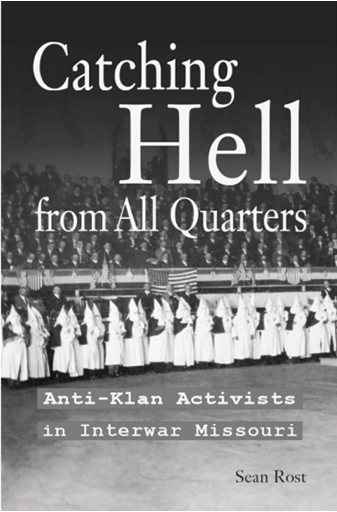 Thanks to Sean Rost we now do have an au-
thoritative history of anti-Klan coalitions in an
important battleground state, one where the
Klan recruited successfully and contested for po-
litical power within both the Democratic and Re-
publican parties. In choosing Missouri, Rost
opted for his home state. Indeed he reports that
his early interest in the subject was piqued by
learning of the resistance to bigotry of central
Missouri German Catholics, who counted
among their numbers Rost’s own ancestors, and
who were bulwarks against the anti-Catholic
KKK. His widening analysis treats the entirety of
the state, including especially the lead belt and
southwest Missouri more generally, the Bootheel
in the southeast, and the urban centers of St.
Louis and Kansas City. Since there is no full his-
tory of the Klan itself in Missouri, Rost had to
construct both parts of a sprawling story from the
ground. He establishes Missouri as an important
Thanks to Sean Rost we now do have an au-
thoritative history of anti-Klan coalitions in an
important battleground state, one where the
Klan recruited successfully and contested for po-
litical power within both the Democratic and Re-
publican parties. In choosing Missouri, Rost
opted for his home state. Indeed he reports that
his early interest in the subject was piqued by
learning of the resistance to bigotry of central
Missouri German Catholics, who counted
among their numbers Rost’s own ancestors, and
who were bulwarks against the anti-Catholic
KKK. His widening analysis treats the entirety of
the state, including especially the lead belt and
southwest Missouri more generally, the Bootheel
in the southeast, and the urban centers of St.
Louis and Kansas City. Since there is no full his-
tory of the Klan itself in Missouri, Rost had to
construct both parts of a sprawling story from the
ground. He establishes Missouri as an important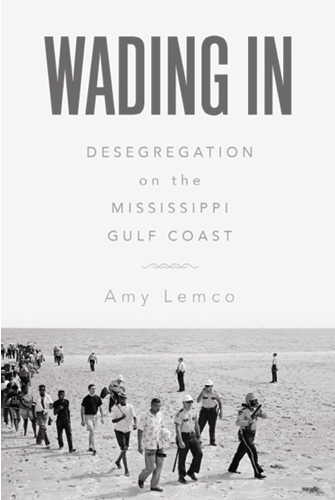 beachfront, marketed to Northerners as a wel-
coming resort destination, with the confined,
under-resourced “Back-of-Town” district where
Black life was legally allowed to operate (p. 6).
Lemco frames the beach not merely as a natural
feature, but as a commercial asset essential to the
white tourism economy. Desegregation here was
not just a social affront to white residents; it was
perceived as an economic death threat by local
elites who feared that the presence of Black
beachgoers would evaporate their tourist reve-
nue.
Central to the narrative is Mason, an instru-
mental figure in the movement. Arriving in Bi-
loxi in 1955, Mason is presented as a man of
science and methodical tactics. In one of the
book’s most compelling anecdotes, Lemco re-
counts an interaction where a police officer or-
dered Mason off the beach. Calmly, Mason asked
the officer to cite the specific statute prohibiting
his presence. The flustered officer could not do
so because no such statute existed for that spe-
cific stretch of sand. As such, segregation was en-
forced by custom and violence, not by law (p. 37).
Mason’s strategy was to expose this legal void,
forcing the state to either codify its racism, and
thereby inviting federal scrutiny, or admit that its
enforcement was arbitrary.
Lemco excels at analyzing the forces that
eventually dismantled the segregationist defense,
particularly the 1947 restoration of the beach
funded by a $1.5 million federal grant. She deftly
argues that the acceptance of these federal funds
effectively transformed the beach from private
frontage into public property. Local activists un-
derstood this legal vulnerability years before the
Department of Justice intervened. The white
homeowners’ defense in United States v. Harrison
County—that the sand pumped in by the Army
Corps of Engineers was merely an addition to
their private front lawns—is exposed by Lemco as
a cynical attempt to socialize risk (erosion control
paid for by taxes) while privatizing gain (exclusive
access).
While the legal arguments are technical, the
description of the physical realities of the move-
ment are harrowing. Lemco recounts the shift
from petitioning for change to direct action, and
the subsequent Bloody Wade-In of April 24,
beachfront, marketed to Northerners as a wel-
coming resort destination, with the confined,
under-resourced “Back-of-Town” district where
Black life was legally allowed to operate (p. 6).
Lemco frames the beach not merely as a natural
feature, but as a commercial asset essential to the
white tourism economy. Desegregation here was
not just a social affront to white residents; it was
perceived as an economic death threat by local
elites who feared that the presence of Black
beachgoers would evaporate their tourist reve-
nue.
Central to the narrative is Mason, an instru-
mental figure in the movement. Arriving in Bi-
loxi in 1955, Mason is presented as a man of
science and methodical tactics. In one of the
book’s most compelling anecdotes, Lemco re-
counts an interaction where a police officer or-
dered Mason off the beach. Calmly, Mason asked
the officer to cite the specific statute prohibiting
his presence. The flustered officer could not do
so because no such statute existed for that spe-
cific stretch of sand. As such, segregation was en-
forced by custom and violence, not by law (p. 37).
Mason’s strategy was to expose this legal void,
forcing the state to either codify its racism, and
thereby inviting federal scrutiny, or admit that its
enforcement was arbitrary.
Lemco excels at analyzing the forces that
eventually dismantled the segregationist defense,
particularly the 1947 restoration of the beach
funded by a $1.5 million federal grant. She deftly
argues that the acceptance of these federal funds
effectively transformed the beach from private
frontage into public property. Local activists un-
derstood this legal vulnerability years before the
Department of Justice intervened. The white
homeowners’ defense in United States v. Harrison
County—that the sand pumped in by the Army
Corps of Engineers was merely an addition to
their private front lawns—is exposed by Lemco as
a cynical attempt to socialize risk (erosion control
paid for by taxes) while privatizing gain (exclusive
access).
While the legal arguments are technical, the
description of the physical realities of the move-
ment are harrowing. Lemco recounts the shift
from petitioning for change to direct action, and
the subsequent Bloody Wade-In of April 24,