
MRI Student Handbook
ARKANSAS STATE UNIVERSITY

MAGNETIC RESONANCE IMAGING PROGRAM
STUDENT HANDBOOK 2026-2027
GENERAL INTRODUCTION
This handbook has been compiled to acquaint students with the policies and procedures utilized by the professional program in magnetic resonance imaging. It is the responsibility of the student to read the entire handbook.
Students enrolled in the Magnetic Resonance Imaging Program are responsible for observing all policies and procedures stated in this handbook, in addition to any rules and regulations which are contained in the A-STATE Undergraduate Bulletin and/or the A-STATE Student Handbook. Failure to read this handbook does not excuse students from the requirements and regulations contained herein.
Students are expected to adhere to the highest standards of medical ethics in all periods of attendance in the clinical education centers. All clinical education centers, while separately located, are considered to be an integral part of the University campus. Any infraction of medical ethics in the clinical education center will be dealt with under the appropriate disciplinary policy of the University. It is the student’s responsibility to know what the appropriate policies and procedures are at each of the clinical education centers. This is covered during the orientation session.
The program, established in 2007, is currently accredited by the Joint Review Committee on Education in Radiologic Technology (JRCERT), 20 N. Wacker Dr., Suite 900, Chicago, IL 60606-2901, 312-704-5300. The program adheres to the STANDARDS established by the JRCERT, available on the JRCERT website at www.jrcert.org and the MRI Program Director’s office.
The curriculum is based on the MRI Curriculum published by the American Society of Radiologic Technologists, the Association of Educators in Imaging and Radiology Sciences, and the Section of Magnetic Resonance Imaging Technologists. A copy of this document may be found in the MRI Program Director’s office.
The Program Faculty of the MRI Program at Arkansas State University reserves the right to make any additions or changes in program policies as deemed necessary at any time throughout the course of the program.
Students will be notified of new policies and/or changes in program policies in writing.
Program Faculty
MRI Program Director: Kendall Youngman, MSRS, RT(R)(CT)(MR)
kyoungman@astate.edu; 870-972-3329
MRI Clinical Coordinator: Tyler Hester, MSRS, RT(R)(MR)(ARRT), MRSO (MRSCTM)
thester@astate.edu; 870-972-2555
MEDICAL LABORATORY AND RADIATION SCIENCES PROGRAM DIAGRAM
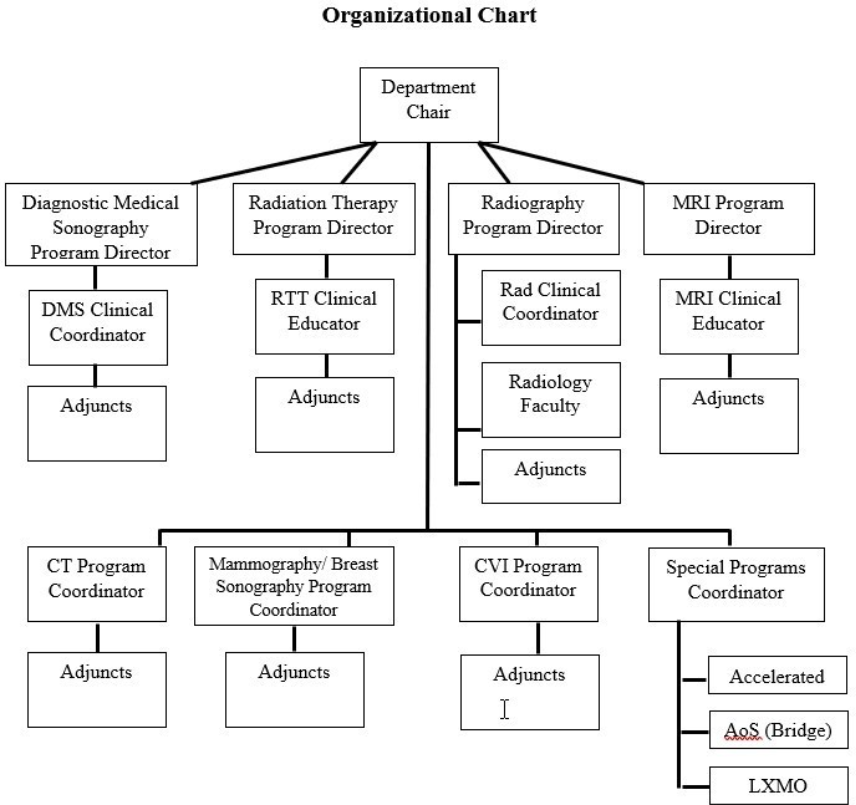
MISSION, PHILOSOPHY AND GOALS
University Mission
Arkansas State University educates leaders, enhances intellectual growth and enriches lives.
College of Nursing & Health Professions Mission
The primary mission of the College of Nursing and Health Professions is to provide quality education to students, graduates and health care providers in a variety of health disciplines. Recognizing its unique position in the Lower Mississippi Delta region, the College provides educational programs that are designed to promote lifelong learning based on the expressed needs of its varied constituencies. The College assesses the attainment of this mission in terms of the contributions its graduates make to health care in the Delta region and beyond.
Program Philosophy
The Magnetic Resonance Imaging Program was established to provide education and training opportunities for individuals seeking entry or advancement as registered MRI technologists. Our program is based on the concept that education is a continuing process whereby the learner determines goals, clarifies values, and develops such discipline and understanding as best meets individual needs for self-actualization. It is our goal to educate students for a successful professional career in the area of magnetic resonance.
Program Mission
The mission of the magnetic resonance program is to prepare competent, entry-level magnetic resonance technologists able to function within the healthcare community.
Goal: Students will be clinically competent.
Student Learning Outcomes:
- Students will apply positioning skills.
- Students will select image parameters.
- Students will utilize magnetic field safety measures.
Goal: Students will demonstrate communication skills.
Student Learning Outcomes:
- Students will demonstrate written communication skills.
- Students will demonstrate oral communication skills.
Goal: Students will develop critical thinking skills.
Student Learning Outcomes:
- Students will adapt imaging parameters for non- routine patients.
- Students will critique images for diagnostic quality.
Goal: Students will model professionalism.
Student Learning Outcomes:
- Students will demonstrate work ethics.
- Students will summarize the value of life-long learning.
AMERICAN REGISTRY OF RADIOLOGIC TECHNOLOGISTS CODE OF ETHICS
- The Radiologic Technologist conducts himself/herself in a professional manner, responds to patient needs and supports colleagues and associates in providing quality patient care.
- The Radiologic Technologist acts to advance the principal objective of the profession to provide services to humanity with full respect for the dignity of mankind.
- The Radiologic Technologist delivers patient care and service unrestricted by concerns of personal attributes or the nature of the disease or illness, and without discrimination, regardless of sex, race, creed, religion or socioeconomic status.
- The Radiologic Technologist practices technology founded upon theoretical knowledge and concepts, utilizes equipment and accessories consistent with the purpose for which they have been designed, and employs procedures and techniques appropriately.
- The Radiologic Technologist assesses situations, exercises care, discretion and judgment, assumes responsibility for professional decisions, and acts in the best interest of the patient.
- The Radiologic Technologist acts as an agent through observation and communication to obtain pertinent information for the physician to aid in the diagnosis and treatment management of the patient, and recognizes that interpretation and diagnosis are outside the scope of practice for the profession.
- The Radiologic Technologist utilizes equipment and accessories, employs techniques and procedures, performs services in accordance with an accepted standard or practice, and demonstrates expertise in limiting the radiation exposure to the patient, self and other members of the health care team.
- The Radiologic Technologist practices ethical conduct appropriate to the profession, and protects the patient’s right to quality radiologic technology care.
- The Radiologic Technologist respects confidences entrusted in the course of professional practice, protects the patient’s right to privacy, and reveals confidential information only as required by law or to protect the welfare of the individual or the community.
- The Radiologic Technologist continually strives to improve knowledge and skills by participating in educational and professional activities, sharing knowledge with colleagues and investigating new and innovative aspects of professional practice. One means available to improve knowledge and skills is through professional continuing education.
STUDENT POLICIES
Academic Advising
Each magnetic resonance imaging student will be assigned to a faculty member who will act as his or her academic adviser. Each adviser will have regularly scheduled office hours which are posted and other hours by appointment.
If a student plans to seek employment in addition to carrying a full-time academic load, this should be discussed with his or her adviser. A realistic workload is recommended. Under no circumstances should employment schedules interfere with academic or clinical responsibilities.
Regularly scheduled classroom and clinical activities may not exceed 40 hours per week.
MRI Program Course Descriptions and Schedules
|
Program name and description |
Semester |
Pre-requisites |
|
RADG 33103 Introduction to Radiography Introduction to the clinical environment, the latest imaging technologies, general patient care, venipuncture lab practice, and legal and ethical issues. |
Summer |
Program Admission |
|
RSMR 44703 MRI Safety and Instrumentation Provides knowledge of the history of MRI, basic MRI terminology, patient and personnel safety, types of magnets, magnetic field strength, radiofrequency hardware, gradient hardware, computer components, cryogens, and site planning. |
Summer |
Program Admission |
|
RSMR 44903 MRI Procedures I Provides knowledge of anatomy, pathology, scanning protocols, contrast administration, and contraindications for magnetic resonance imaging of the head, spinal column, and musculoskeletal system. |
Fall |
Program Admission |
|
RSMR 44953 MRI Physical Principles I Introduction of the concepts of basic physics and instrumentation for magnetic resonance imaging. Topics include nuclear magnetism, the Larmor equation, tissue characteristics, and imaging parameters. |
Fall |
Program Admission |
|
RSMR 44753 MRI Clinical Education I The course will provide beginning level content and clinical practice experiences designed for sequential development, application, analysis, integration, synthesis and evaluation of concepts and theories in magnetic resonance imaging. |
Fall |
RSMR 44703 |
|
RSMR 44863 Data Acquisition and Processing Explains the patient coordinate system and spatial localization, magnetic resonance imaging gradient system, data manipulation, and quality control practices in MRI. |
Spring |
Program Admission |
|
RSMR 44733 MRI Procedures II Provides knowledge of anatomy, pathology, scanning protocols, contrast administration, and contraindications for magnetic resonance imaging of the neck, thorax, abdomen, and pelvis. |
Spring |
RSMR 44903 |
|
RSMR 44853 MRI Physical Principles II Exploration of imagining options, spin echo, fast spin echo, STIR, FLAIR, gradient imagining, time-of-flight, and echo planar imaging. Includes a comprehensive analysis of image artifacts. |
Spring |
RSMR 44953 |
|
RSMR 44763 MRI Clinical Education II The course will provide intermediate level content and clinical practice experiences designed for sequential development, application, analysis, integration, synthesis and evaluation of concepts and theories in magnetic resonance imaging. |
Spring |
RSMR 44753 |
|
RSMR 44773 MRI Clinical Education III The course will provide advanced level content and clinical practice experiences designed for sequential development, application, analysis, integration, synthesis and evaluation of concepts and theories in magnetic resonance imaging. |
Summer PRN |
RSMR 44763 |
|
RSMR 44833 Advanced MRI Imaging Anatomy, pathology, scanning protocols, contrast administration, and contraindications for magnetic resonance angiography, venography, functional imaging, and cardiac imaging. |
Summer |
RSMR 44733 |
|
RSMR 44802 Imaging Information Management Explains the functioning of computers and computer concepts in medical imaging. Topics covered are HIPAA, PACS, and RIS in MRI and the imaging department. |
Fall |
Program Admission |
*May be offered in an online or hybrid format.
There are no additional fees associated with online (distance education) courses. Students whose financial aid depends on the traditional classroom setting should let program faculty know ASAP.
Academic Responsibilities and Standards
Textbooks
Each student is responsible for purchasing the required textbooks before the second meeting of the class. Because the same textbook may be used again in later courses, it is strongly recommended that before selling books, a student consults the magnetic resonance imaging faculty who will be teaching future courses.
Assignments
Each student is responsible for completing all reading, writing, and oral assignments made by the faculty. If a student is absent from class for any reason, he or she is still responsible for the material disseminated in class.
Classroom Etiquette
Each student is responsible for learning the content of any course in which he or she is enrolled and respecting the rights of fellow students in the classroom.
The instructor has the right to request any disruptive student to leave the classroom. Continued misbehavior in the classroom is cause for disciplinary action.
The use of any tobacco product, cell phones, and personal laptops (unless prior approval is granted) is prohibited in the classroom and/or in the laboratory.
You are solely responsible for what you post online. Inappropriate postings specific to patients, classmates or faculty that include discriminatory remarks, harassment or threats, or violations of professional codes of conduct are subject to disciplinary action. Your actions could adversely affect your standing in your health professions program which could include program dismissal.
You should be aware that future employers may view potential candidate’s websites. Students are advised to review their site (s) for any unprofessional images or language which could adversely affect successful employment upon graduation. Please make responsible decisions about your use of social media.
Students are allowed, and at times encouraged, to use various social media sites for educational or personal reasons. However, at no time shall students in the MRI program post or contribute to conversations that may, in any way, violate patient rights or damage the relationship between the MRI program and its clinical affiliates. Cyberbullying by any student within the program will not be tolerated.
Students are encouraged to join the SARIS-MRI Facebook page for job postings and other miscellaneous announcements. As always with any form of social networking, please be aware that postings may be seen by others. This not only includes personal postings, but postings in which the student may be “tagged” by another. School administrators and employers have the right to discipline, dismiss, or refuse to hire based on social media postings.
Course Syllabus
Within the first two class meetings of the semester each instructor is required to provide each student in the course with a syllabus. The syllabus will contain a description of the course, the goals and/or objectives of the course, the method of evaluating and grading students, make-up policy, and a description of written or oral assignments.
Evaluation and Grading
The program has established standards of grading that supersede the University’s grading policy and that are consistent with the minimum passing score on the certification exam for Magnetic Resonance Imaging.
The grading scale used is:
A = 90% – 100%
B = 80% - 89%
C = 75% - 79%
D = 60% – 74.99% F = < 60%
Due to the uniqueness of the MRI program and the responsibilities of the MRI technologist, a high level of academic and technical competence is required of all students in the program. Therefore, a grade of “C” or better is required in all RSMR courses for a student to progress in the professional program. In order for a student to successfully complete this course, the student must have an average of 75% or greater on exams [unit exams and the final exam].
If an overall weighted average of 75% is not achieved on exams, then the exam average will be posted as the final grade for the course. Written and other assignments will not be included in this calculation. Please note: An overall weighted average or weighted exam average of lower than 75% (ex. 74.99%) is failing. A letter grade of “D” or “F” will be assigned. If a 75% average is achieved on exams, assignments that make up the remaining weighted percentage will be added to the exam average. If the written assignments (ex. quizzes, worksheets, etc.) portion lowers or raises the overall grade, that score will be posted as the final grade for the course.
Standards of Academic Achievement
If the cumulative, semester, or session grade point average falls below 2.00, the student will be placed on academic probation. At the end of the next semester or session of enrollment, the cumulative grade point average must be at least 2.00 for the student to remain in the Magnetic Resonance Imaging Program.
A student who receives a grade below “C” in any of the MRI courses may not continue in the MRI Program. The policy and procedure for readmission into the Magnetic Resonance Imaging Program is clearly outlined in the A-STATE Undergraduate Bulletin.
Clinical evaluations will be completed each semester and may be used to set goals for future clinical assignments.
Cheating and Plagiarism
The maintenance of academic standards and integrity includes the obligation of honesty. A student wo uses dishonest or deceitful means to obtain a grade is guilty of cheating; a student who submits another’s work as his or her own without adequate attribution is guilty of plagiarism.
Submission of clinical hours, competencies, or evaluations other than those hours and achievements actually performed is also considered cheating. According to College wide practice, cheating and/or plagiarism will result in disciple action according to the following:
First offense: The student will receive a zero on the assignment/test. If in a clinical situation, his/her clinical grade will be lowered one letter grade.
Second offense: may result in dismissal from the program. Cheating and/or plagiarism will result in disciplinary action and may result in dismissal.
Copyright Violation
It is illegal to copy any copyrighted material unless permission has been obtained from the copyright owner. A student guilty of copyright violation may face sanctions by the Magnetic Resonance Imaging Program, A- STATE, the State of Arkansas, and/or Federal authorities.
Expenses
In addition to the normal university tuition, fees, and book costs, a student in the Magnetic Resonance Imaging Program will incur additional expenses. These expenses include, but are not limited to:
- Transportation: Each student is responsible for transportation to his/her assigned clinical site. Transportation and all costs incurred for travel to the clinical site is the sole responsibility of the student. A valid driver’s license is required prior to the start of clinical rotations.
-
Uniforms: Each student is responsible for providing his/her own uniforms, including lab coat and shoes. Uniforms and lab coats must be monogrammed identifying the student as an A-State MIRS student.
Vaccination and skin testing: Students ADMITTED to any program in the College of Nursing and Health Professions must present the following immunization and test documentation:
- Rubella and rubeola (Arkansas statute).
- Mumps and varicella vaccination or titer (clinical affiliate (hospital) requirements when working with infants and children).
- If no hepatitis immunization or titer, then must begin the Hepatitis B vaccine series prior to enrolling in a clinical practicum class.
- TB skin test each year that the student is enrolled in a clinical practicum. If skin test is positive, documentation of treatment status must be submitted.
- Flu vaccination each year that the student is enrolled in a clinical practicum.
- COVID vaccination (exemption paperwork permitted by limited clinical sites).
- Cardiopulmonary resuscitation (CPR) certification is required before taking any practicum courses. Certification status must be maintained and documentation submitted to the appropriate department throughout enrollment in any program.
- Drug screening: May be required prior to attending site specific orientation.
Liability Insurance:
Proof of professional liability insurance is required before a student can begin clinical education. You may apply online at http://www.hpso.com/. If applying for liability insurance with HPSO, select “Radiologic Technician/Technologist” as the profession.
Background Checks:
Criminal background checks may be required by the College of Nursing and Health Professions and/or individual clinical sites. The appropriate forms and applicable fees will be distributed to students prior to the start of the clinical rotation.
Clinical Software Fee:
- Trajecsys: The radiologic sciences programs at A-State enrolled in a clinical software program http://www.trajecsys.com/ Students are charged a one-time fee for annual use of the software program. This fee will be attached to the first clinical course.
- Verified Credentials (one-time fee): All incoming students are conditionally accepted into the MRI program dependent upon successful completion of a background check. Background checks are purchased through a CNHP based Verified Credentials within the first two weeks of the program start date. Records are reviewed by the Department Chair and any concerns are addressed with the affected student and the Dean of the College of Nursing and Health Professions. Drug screenings may be required by certain clinical sites. Removal from the program is possible based on background check and/or drug screening results. Students will also be required to upload immunizations, TB skin tests, MRI safety sheets, CPR certification, and other necessary clinical information into their MIRS based Verified Credentials account.
- CloverLearning Subscription: The MRI program utilizes a supplemental learning platform for educational videos and and assignments. Students are charged a one- time fee for annual use of the online program. This fee is attached with MRI Physical Principles.
Change of Address
The Department of Health Professions, Radiologic Sciences Programs and University registrar’s office (http://registrar.astate.edu/) should be notified promptly of changes in name or address. Correct phone numbers should be filed with the Department of Health Professions and the Magnetic Resonance Imaging Program so that students can be reached in case of an emergency.
Health & Safety
-
Health Examination: Students are required to submit a completed health form and to have a physical examination prior to entering the clinical site. The required health form is to be completed by a physician and returned to MRI Program Faculty prior to the beginning of clinical rotations during the Fall Semester.
-
Health Care: The on-campus Student Health Center is open Monday through Friday for the benefit of students. A description of services and the hours of availability are listed in the Undergraduate Bulletin and on the A-State website at https://www.astate.edu/a/student-health-center/. Except for the services of the Student Health Center, the University assumes no responsibility for health care costs.
-
Illness: If the student is ill and unable to attend the clinical rotation, the MRI clinical supervisor and MRI Program Faculty must be notified as soon as possible prior to the scheduled starting time. A student is expected to use good judgement in determining whether or not to attend the clinical rotation because of illness. If the student is ill and unable to attend class, the Program Director should be notified. If a student has a suspected communicable disease, he/she should contact the clinical instructor before reporting for duty.
-
Injury: Should a student become injured or acutely ill during the course of assigned clinical duties, the clinical site to which that student is assigned will provide treatment and emergency care, with any charges for treatment being the sole responsibility of the student. Any injury, however minor, occurring while on duty at the clinical site must be reported to the clinical supervisor and the appropriate incident form completed with copies to the MRI Program Director at A-STATE.
-
Health Insurance: Students are strongly encouraged to have current health insurance for clinical rotations. Arkansas State University offers each student the opportunity to purchase an accident and hospitalization insurance policy through a reputable insurance company. A-State assumes no responsibility for collecting premiums or for paying claims. Professional liability insurance should not be misconstrued as including health insurance coverage.
-
Pregnancy: In compliance with the Nuclear Regulatory Commission (NRC) regulations, a female student who becomes pregnant has the option of whether or not to inform program officials of her pregnancy. If the woman chooses to voluntarily inform the officials of her pregnancy, it must be in writing and indicate the expected date of confinement (delivery). In absence of this voluntary written disclosure, a student cannot be considered pregnant. If the student does voluntarily disclose her pregnancy, she does have the option of continuing the educational program without modification of interruption. Another option can include modification in clinical assignments. At any point in time, the student may provide a written withdrawal of declaration. If the pregnant student chooses to disclose her pregnancy, she will receive counseling to inform her of the possible risks associated with magnetic and RF exposure to the fetus. To limit such risks, a declared pregnant student will not be permitted to perform duties within Zone IV during actual scanning. With the understanding of such risks, the pregnant student will be required to sign a form releasing the university and the program of any responsibility should problems develop with the pregnancy. The Pregnancy Release form is found in the Program Documents section of this handbook.
-
Communicable diseases may require that one or more of the following protective measures be taken. The student may be:
-
Required to use reverse isolation techniques while working with non-high-risk patients.
-
Reassigned to a non-patient care area.
-
Relieved from clinical duty until he or she is no longer contagious.
Magnetic Field Safety
The magnetic resonance (MR) system has a very strong magnetic field that may be hazardous to individuals entering the MR environment or MR system room if they have certain metallic, electronic, magnetic, or mechanical implants, devices, or objects. Students are expected to undergo an MR screening process as part of their clinical agreement to ensure their safety in the MR environment.
For a student’s own protection and the protection of those in his/her supervision, he/she is required to immediately notify and report to MRI faculty any trauma, procedure, or surgery they experience or undergo where a ferromagnetic object or device may have become introduced within or on them. This will permit appropriate screening of the student to determine status change in the safety of permitting that student into MRI Safety Zones III and/or IV. The MR Screening Form for Individuals is found in the Program Documents section of this handbook.
Radiation Safety
Due to the unique concerns and health risks associated with ionizing radiation, students enrolled in the MRI program are not allowed to observe, assist, or hold patients inside any room that is actively conducting an exam utilizing ionizing radiation. Students ARE allowed to assist with patient transport, sterile trays, or other patient care related tasks whenever ionizing radiation is not in use.
Campus Safety
Safety is a shared responsibility at Arkansas State University, which is reflected in an organizational structure with multiple departments responsible for often interconnected pieces of campus safety. From protecting the public to protecting your rights, members of the campus community can find information on each of these essential functions at https://www.astate.edu/safety/ .
Physical and Mental Performance Requirements
Because of the nature of the work required in the Magnetic Resonance Imaging Program offered at A-STATE, the applicant must be:
-
-
Able to reach, manipulate, and operate equipment necessary for exam procedures.
-
Able to move, manipulate, and observe a patient or client as necessary for the profession.
-
Able to visually assess patients, medical test results and the working environment to correctly decide the appropriate action to take for the benefit to the patient/client.
-
Able to clearly communicate, both verbally and in writing, with the patient, client, family members, medical personnel and others.
-
Able to disseminate information relevant to patient care and work duties, and also hear clearly enough to gather information relevant to patient care and work duties.
-
Able to make appropriate judgment decisions in an emergency or where a situation is not clearly governed by specific guidelines.
-
Able to demonstrate emotional stability and psychological health in day-to- day interactions with patients/clients, staff, family members, and others in routine and non-routine decision-making processes, and on the daily execution of didactic and clinical assignments.
-
Able to maintain professional demeanor and conduct under extremely stressful circumstances.
-
Able to lift at least 50 pounds.
Able to safely work in the MRI suite – Magnetic Resonance Imaging students should wear no implants or have devices surgically implanted that are deemed non-MRI compatible.
STANDARD PRECAUTIONS POLICY STATEMENT
The Magnetic Resonance Imaging Program enforces current A-STATE policies on communicable diseases. Any student suffering from a contagious infection will be asked to provide medical documentation that the contagious phase has passed prior to continuing in class. This is to insure minimum risk to others.
Because many people who carry highly infectious pathogens (e.g., AIDS virus, hepatitis A & B, etc.) are not aware of it, all students and faculty will strictly adhere to this policy. These safety guidelines are designed to protect the students, faculty, and patients from the spread of infectious diseases.
- Wear gloves at all times when working with patients where blood/body fluids are evident or likely; i.e., open wound trauma, barium enema tip insertion, IV injection.
- Wear gloves when wiping blood/body fluids from equipment. Use appropriate cleaning chemicals.
- Wash hands after handling any blood and body fluids. Wash hands frequently during patient care activities.
- Dispose of linens soiled with blood and body fluids in appropriate containers.
- All infectious needles, tubing, etc., need to be placed in puncture-proof containers. Do not clip needles or recap needles.
- All injuries and splashes must be reported to faculty and clinical supervisor immediately.
- Any splash of body fluid entering a mucous membrane (eye, nasal passage, and mouth), open cut or wound shall be reported immediately to the faculty.
- An incident report will be completed.
If occurrence at clinical site, student will be sent to the health service or appropriate treatment facility for evaluation and treatment. The student will pay for cost of any treatment.
ARKANSAS STATE UNIVERSITY COLLEGE OF NURSING AND HEALTH PROFESSIONS
Policy/Procedure Guidelines for Infection Control (05/15/2013)
INTRODUCTION
The policy guidelines herein are of a general nature and deal with HIV-related infections as well as other blood borne pathogens. They apply to all students/faculty/staff in the College of Nursing and Health Professions (CNHP). Due to differences in the various programs, individual CNHP programs may have specific rules and/or guidelines that are modifications of those in the general policy; however, the specific policies of the various programs will be consistent in their intent with the guidelines noted herein. This policy shall be reviewed annually and modified as necessary based on the current information from the CDC and other resources.
ADMISSIONS
The HIV/HBV (Human Immunodeficiency Virus/ Hepatitis B Virus) or any significant blood borne pathogen status of an applicant should not enter into the application process. Applicants applying for healthcare programs should, however, be informed that certain diseases may necessitate either a modification of their program, or in the extreme may necessitate their dismissal from a program if they cannot perform procedures and/or tasks that are considered essential to their educational experience.
RETENTION
If it is determined that a student is sero-positive for HIV/HBV, or any other significant blood borne pathogen, or is clinically manifesting symptoms of a related disease process, that student should receive counseling about personal health care concerns and about interaction with others, especially clients. The student should be counseled by a designated faculty member in his/her respective program. The function of the designated faculty member is to counsel the student as to whether the program of education should be modified, another educational program considered, or in the extreme, whether the student should be dismissed from a program because of the inability to perform procedures and/or tasks crucial to the educational program. When considering the possibility of modifying clinical experiences or whether to dismiss, the designated faculty member will request that the Infection Control Committee convene to consider the specific student situation.
INFECTION CONTROL COMMITTEE
The Infection Control Committee will be comprised of at least one representative from each of the programs in the College of Nursing and Health Professions. The dean will be charged with appointing faculty to serve on this committee after consultation with chairs or directors of the various programs. Once the committee is established, a chair shall be elected by the members. In addition, a community member who is an expert in infectious disease will be designated as a consultant to the committee.
The committee shall function to consider the specific student/faculty/staff situations outlined in the HIV/HBV Guidelines. In addition, this committee will function to review the HIV/HBV Guidelines on an annual basis. The committee will coordinate annual instruction on Infection Control Updates for the faculty. This committee will also serve the programs by making recommendations for infection control policy that may impact the student/faculty/staff populations. Information regarding such policy will be included in the various programs’ Student Handbook and the CNHP Faculty/Staff Handbook.
When the Infection Control Committee convenes to consider specific student/faculty/staff situations, a timely response is in order. Individuals will be provided a letter outlining the committee recommendations within a one-week period after convening. During this time period the student/faculty/staff person shall not engage in direct client contact. Should an individual wish to appeal the decision of the committee, the established University Grievance process should be followed (See A-STATE Student/Faculty Handbooks).
COUNSELING
It is the responsibility of the programs to provide counseling to a student/faculty/staff member who is determined to be zero-positive for HIV/HBV, or any significant bloodborne pathogen, or who manifests symptoms of a related disease process. The counselor interaction with the student/faculty/staff member should be reported to the Infection Control Committee only when the person's health status necessitates a modification in the clinical program or dismissal. It will be the responsibility of the counselor to verify that the student is aware of options for testing, counseling and health care. In addition, the counselor will verify that the student has been provided with specific information that relates to client contact.
The following information is provided in order to refer students when necessary to outside agencies for assistance and follow-up. This information should be reviewed and updated annually.
HIV Infection Services provided by A-STATE Student Health Center:
Students at Arkansas State University who desire HIV testing will be referred to the Craighead County Public Health Department for testing. This insures privacy and integrity of specimen collection.
The Student Health Center has developed a media library (videos, pamphlets) for persons coming in with questions about HIV infection. The Center is located adjacent to the football stadium and can be reached at ext. 2054.
Services offered by the Public Health Department
The Craighead County Public Health Department is open from 8:00 a.m. until 4:30 p.m. for testing. The department offers pre- and post-test counseling as well as HIV testing. The cost of the service is $5.00 which pays the record maintenance fee. The Public Health Department can be contacted by calling 933-4585. Offices are located in the Arkansas Services Center on 611 E Washington Ave, Ste B, Jonesboro, AR 72401.
An individual who desires testing should allow about one hour for the procedure because pre-counseling is extensive. Appointments are required.
The Public Health Department will provide the Hepatitis B vaccine for persons up to age 18. They will not provide testing for Hepatitis B.
The Public Health Department will provide follow-up care for any individual with a positive TB skin test or one with a diagnosis of tuberculosis.
Services offered by Northeast Arkansas Regional AIDS Network (NARAN)
This organization offers free confidential testing. Pre- and post-counseling is provided by certified counselors. They also provide direct care services or referrals for those persons who need them, including financial counseling. NARAN is also a network agency for persons living with AIDS. A referral can be made by contacting the office at 931-4HIV (4448).
The counselor should not neglect to refer the student/faculty/staff member to his/her private physician for guidance.
Students/faculty/staff outside of Craighead County should seek specific referral information from the Chair of the Infection Control Committee or from a faculty member designated as counselor at the distant sites.
HIV/HBV GUIDELINES FOR ON-CAMPUS LABORATORY AND CLINICAL SETTINGS
In accordance with sections 503 and 504 of the Rehabilitation Act of 1973, schools must provide equal treatment to persons who have contracted the HIV/HBV virus.
Furthermore, schools may not discriminate against any individual based on the perception that he/she is infected.
TRANSMISSION INFORMATION
All CNHP students and faculty will employ Standard Precautions while in the clinical setting. CNHP students will receive instruction and annual evaluation regarding transmission of blood-borne pathogens and the use of Standard Precautions. The Infection Control Committee will coordinate instruction on Standard Precautions for faculty on an annual basis. It will be the responsibility of faculty members to document annual instruction through the Infection Control Committee.
POLICY
Students, faculty, and staff with HIV/HBV, or any significant blood borne pathogen, should be allowed equal access, as long as their medical condition permits, to university facilities or campus activities, including participation in clinical experiences or other academic and social activities offered by the university.
All confidential medical information is protected by statute and any unauthorized disclosure may create legal liability. The duty of the health care providers to protect this confidentiality is superseded by the necessity to protect others in very specific circumstances.
An infected student/faculty who is symptomatic may be excluded from providing direct client care, determined on a CASE-BY-CASE basis by the Infection Control Committee (appropriate supervisory personnel). In addition, should an individual seroconvert and express concern regarding clinical practice, the committee will convene to review the case.
Students may be asked to serve as source partners in on-campus laboratories for procedures involving needle sticks or other forms of vascular access. For criteria related to laboratory participation, see the specific program handbook.
EXPOSURE (Laboratory and Clinical Settings)
Students and faculty in the College of Nursing and Health Professions may be exposed to blood borne pathogens such as HIV and HBV. In the clinical and classroom laboratory settings, students/faculty are expected to utilize Standard Precautions, hand washing and protective clothing/gear to prevent contact with blood and other potentially infectious materials.
Exposure incident means a specific eye, mouth, other mucous membrane, non-intact skin, or parenteral contact with blood or other potentially infectious material that result from one's duties as a CNHP student or faculty member. An exposure incident involving a student/faculty/staff/visitor i.e. volunteer, invited guest in the CNHP, while in a clinical facility or campus laboratory is treated in a similar manner to any type of accident occurring within the agency.
On-Campus Laboratory or Clinical Setting: Blood Born Pathogen Post Exposure Protocol
Should a student or faculty member be exposed to blood borne pathogen in an on- campus laboratory or clinical setting, the following post-exposure protocol is recommended:
- The student will notify the faculty member supervising the learning experience. If the exposed individual is a faculty member, he/she will notify the chairperson of the specific program in the CNHP.
- As soon possible following the exposure, the college incident form will be completed by the faculty member/student.
- The exposed individual will be referred to the Student Health Center for evaluation if the event occurs during operating hours. If the exposure occurs when the Health Center is closed, the faculty member will determine the individual's primary care options and refer the person to those resources.
- It is suggested that the post-exposure protocol be managed by the individual's primary care provider at the individual's expense.
- If there is a delay in reporting an exposure incident, it is recommended that the same protocol be followed.
Off-Campus Laboratory or Clinical Setting: Blood Borne Pathogen Post Exposure Protocol
If a student/faculty member is exposed to blood or other potentially infectious materials in the off campus setting, this Blood Borne Pathogen protocol is to be followed.
- The student will notify the clinical faculty. If the exposed individual is a faculty member, s/he will notify the chairperson of the specific program at the CNHP.
- The student, clinical faculty or chairperson will notify the supervisor of the area where the exposure occurred. Thereafter, post-exposure protocols for the clinical institution will be followed.
- The infection control staff member/epidemiologist of the clinical facility will be notified of the exposure immediately by the student or if possible by the clinical faculty member. If a faculty member has been exposed, this individual will notify the infection control staff/epidemiologist.
-
As soon as possible following a report of an exposure incident the clinical faculty and infection control staff/epidemiologist should provide the student with counseling about an immediate confidential medical evaluation and follow-up at the student's expense. In the case of a faculty member's exposure, the individual is expected to communicate directly with the infection control staff/epidemiologist. The medical evaluation and follow-up should include, at a minimum, the following requirements:
-
Documentation of the route(s) of exposure and the circumstances under which the exposure incident occurred.
-
Identification and documentation of the source individual unless the clinical facility staff establishes that the identification is infeasible or prohibited by state or local law.
5. The source individual's blood shall be tested as soon as possible after consent is obtained in order to determine HBV and HIV infectivity. If consent is not obtained, the clinical facility shall establish that the source individual's consent cannot be obtained. When the source individual's consent is not required by law, the source individual's blood shall be tested and the results documented.
6. When the source individual is already known to be infected with HIV or HBV, testing for the source individual's HIV or HBV status need not be repeated.
7. Results of the source individual's testing shall be made available to the exposed individual who should also be informed of applicable laws and regulations concerning disclosure of the identity and infectious status of the source individual.
- The exposed student/faculty member's blood should be tested as soon as possible.
- It is suggested that the post-exposure protocol be managed by the student/faculty member's personal healthcare provider.
-
Substance Abuse Policy & Procedures
The College of Nursing and Health Professions recognizes its responsibility to provide a healthy environment within which students may learn and prepare themselves to become members of a health occupation. Within each profession there are codes and standards for conduct by which all members of the profession are expected to function.
Thus, when engaged in educational activities whether on campus or in the clinical setting health professionals are expected to be free from the abusive influence of chemical substances/drugs1. When students are under the influence of drugs and alcohol, they present a threat to patients, other students and the employees and visitors of clinical facilities. It is the responsibility of the student to report any medication/s taken which would adversely affect their ability to perform safely in class or clinic. Written documentation will be required for verification of medications taken and will be placed in the student’s file. As a condition of admittance and retention in any professional program in the Arkansas State University College of Nursing and Health Professions, all students must sign a SUBSTANCE ABUSE COMPLIANCE CONTRACT agreeing to adhere to the Substance Abuse Policy & Procedures when conducting any activity associated with their educational program. As the contract notes, it is inclusive of testing for substances and appropriate release of that information.
PROCEDURES
If a student demonstrates behavioral changes associated with substance abuse (see attached list) while engaged in course activities, the following procedures will be enforced:
-
The first time the student is observed exhibiting behaviors that are linked to or associated with substance abuse (see attached list), the student will be approached by a faculty member or a person who is designated to provide supervision. Prior to the approach, an assessment of the situation is indicated and a second observer should be asked to verify the behavior. The purpose of this encounter is multifold. It openly allows recognition that such behaviors have been observed. It also creates the opportunity for the student to pursue behavior modification as an option that is non-punitive and preserves self direction.
During the encounter, the student will be informed about and required to seek evaluation by the Counseling Services Center at Arkansas State University. If the behaviors are observed in a clinical setting, the student will be removed from participation in activities and asked to leave the environment. An absence for the day will be recorded. Written documentation that the student was confronted and informed about the Counseling Center is to be signed by the student and faculty. A copy will be forwarded to the Department Chair/ Program Director and retained in the student’s cumulative file during the time he/she is enrolled as a professional student in the Arkansas State University College of Nursing and Health Professions. A copy will be forwarded to the A-STATE Counseling Center. The Center will provide a written evaluation with treatment recommendation to the student, and to the Department Chair/Program Director. If the student, upon reviewing the Center’s recommendations, declines to allow them to be released to the Department Chair/Program Director, the student will be required to seek a Psychological or Psychiatric evaluation (from a Licensed Physician [Psychiatrist] or Psychologist), and submit the results and recommendations to the Department Chair/Program Director. The student will be expected to comply with ALL recommendations, and allow release of records attesting to his or her compliance and improvement.
-
Due to the level of accountability health professionals have for their action toward others, the second time behaviors are observed and verified by a second observer, the student will immediately be asked to submit to body fluid testing for substances at a lab designated by the College of Nursing and Health Professions who have identified procedures for collection (see attached). The cost of the test will be borne by the student. Refusal to submit for testing warrants immediate program dismissal.
At the time the specimen is released to the testing lab, the student will sign a release statement requesting that the test results be sent to the Dean’s Office, College of Nursing and Health Professions, and to the student. If the results are negative, no further action will be taken and the student will only be allowed to make up work missed. If the results are positive (and substantiated by a second or confirmation test), the student will be dismissed from the professional program.
Laboratory results will only be disclosed to individuals whose duties necessitate review of the test results and confidentiality will be adhered to as stringently as possible.
-
Readmission of the student to the program is contingent upon the following conditions:
-
Formal application for readmission to the program.
-
Meeting specific program admission criteria as noted in the Undergraduate/ Graduate Bulletin
-
Clinical space availability.
-
Documentation that a prescribed treatment program has been completed by the student related to the drug/alcohol condition. The documentation is to be submitted to the Dean’s Office, College of Nursing and Health Professions by the designated treatment facility.
-
Follow-up program as suggested by the treatment facility which may include, but is not limited to, one or more relapse prevention procedures. The follow-up program will be individual specific and written as part of a contractual agreement with the student.
-
Arkansas State University may be required by state or national regulatory boards to submit information regarding a student’s substance abuse history when he/she applies to take the examination for licensure. There is no guarantee that these boards will allow individuals with a substance abuse history to take the examination. Each case is judged individually by each board.
5. Students will be required to abide by individual institutional policies relating to substance abuse in clinical facilities to which they are assigned.
-
Behavioral Changes Associated with Drug Abuse
BEHAVIORAL CHANGES ASSOCIATED WITH DRUG ABUSE
The College of Nursing and Health Professions has developed the following list of behaviors that are not all inclusive but, when observed, can be used as indices to identify an individual who at the moment of observation could be under the influence of a “drug” (see the Substance Abuse Policy for definition of the term “drug” and for the mechanisms to operationalize the policy). The College of Nursing and Health Professions is guided by behavioral descriptors that are stated in the latest edition of Diagnostic & Statistical Manual of Mental Disorders.
*Observation of any of these behaviors will result in dismissal from the learning environment (clinical or classroom).
Attention Deficit/Cognitive Impairment
- ataxia
- tremors, especially of the hands
- slowed response time in a familiar skill
- diminished from the usual in coordination/dexterity
-
inappropriate verbal remarks (subjects/words/expletives)
-
inappropriate behaviors or those beyond the societal norm such as: angry outbursts/unrestrained agitation
-
crying that cannot be explained euphoria
-
paranoia hallucinations
-
behaviors that are markedly changed from that individual such as introversion
-
extroversion
-
sullen/irritable
-
giddy
-
defensiveness
Somatic Manifestations/Discomforts
-
odor of alcohol on breath nausea/vomiting/thirst
-
frequent trips to bathroom/complaint of urinary frequency or diarrhea
-
hiccoughs
-
reddened sclera (bloodshot eyes) pupil changes/drooping eyelids
-
complain of blurred vision or inability to focus
Speech/Communication Impairment
-
slurred (thick tongue)
- rapid/choppy communication pattern
- incoherent speech
BEHAVIORAL PATTERNS ASSOCIATED WITH SUBSTANCE ABUSE
The following is a list of behavioral patterns that may surface when drugs have been abused. While these patterns have many causes, thorough assessment and detailed documentation is needed over a period of time to determine if there is any relationship to drug abuse. Patterns of behavior to observe and validate are:
-
repeated tardiness
-
frequent absenteeism
-
numerous and chronic somatic complaints (colds/GI problems/lack of sleep/weight loss/sluggishness/low energy)
-
untidy personal appearance or deterioration in quality of grooming
-
lack of attention to hygiene (hair, nails, skin, oral)
-
multiple crises in personal life
-
avoidance/lack of eye contact
-
isolation/lack of peer support
-
repeated excuses for below standard performance
-
forgetfulness with appointments/assignments
-
slowed response time in familiar activities
-
behavior shifts/mood swings
-
lack of trust and suspicious of the motives of others
-
needle tracks on body surface
-
behaviors surrounding the administration of narcotics: frequent need to waste “unused” medications
-
- recording the administration of larger doses than ordered
- unauthorized possession of the narcotic key unsupervised entry into narcotic cabinet
- volunteering to be in situations to gain greater access to narcotics
- taking frequent breaks/numerous occasions when whereabouts unknown
Criteria for Urine Drug Screens NOTICE: PROVIDE LAB WITH THIS CRITERIA
ANY DRUG SCREENS SUBMITTED TO ARKANSAS STATE UNIVERSITY, COLLEGE OF NURSING AND HEALTH PROFESSIONS SHALL HAVE MET THE FOLLOWING CRITERIA:
-
Specimen collection is witnessed.
-
BASIC 10-PANEL* DRUG SCREEN INCLUDING ALCOHOL, MEPERIDINE AND DRUG OF CHOICE (SEE #7).
-
Laboratory must be CLIA1 approved.
-
Confirmation of positive results is done by GCMS2. If specimen must be sent to another laboratory for confirmation, the chain of custody is maintained.
-
Report, in addition to results, will include:
-
Chain of custody;
-
Drug history;
-
List of drugs screened;
-
Confirmation of method used; and
-
Specific gravity.
-
The laboratory will retain negative specimens for a minimum of two (2) weeks and positive specimens for a minimum of one (1) year.
*10-PANEL INCLUDES:
- Amphetamines
- Benzodiazepines
- Cannabinoids
- Cocaine
- Opiates
- PCP
- Barbiturates
- Methadone
- Methaqualone
- Propoxyphene
THE DRUG SCREEN SHALL TEST FOR THE FOLLOWING:
- Amphetamines
- Methaqualone
- Barbiturates
- Phencyclidine
- Benzodiazepines
- Propoxyphene
- Cannabinoids
- Alcohol
- Cocaine
- Meperidine
- Opiates
- Drug of choice
- Methadone
DRUG SCREENS WHICH DO NOT TEST FOR THE ABOVE WILL BE CONSIDERED NON-COMPLIANT WITH THE ORDER.
1Clinical Laboratory Improvement Act: Set of Federal Regulations which clinical labs must meet for certification.
2Gas Chromatography Mass Spectrometry
Adopted from Arkansas State Board of Nursing, January 1997.
Student Records
The registrar’s office maintains records of all didactic and related courses attempted and/or completed by all students. The following records are kept in the Department of Health Professions and the Magnetic Resonance Imaging Program:
-
Attendance and clinical rotation records
-
Clinical competency records
-
College transcripts
-
Advising documents
-
Clinical evaluations
Right to Inspect Records
Under the Federal Family Educational Rights & Privacy Act of 1974 (Buckley Amendment), students have the right to inspect and review any and all official records, files and data pertaining to them.
Student Counseling
The purpose of student counseling is to promote, assist, and maintain superior student performance. Feedback given in counseling may be used to identify areas of strength and weakness in student performance or behavior. All counseling sessions are documented and filed in the student’s permanent folder.
Withdrawal from the Program
The following steps are necessary when withdrawing from the program.
-
The student should meet with the Program Director to discuss the withdrawal process.
-
The student should write a formal letter of resignation stating the reason for withdrawal. This letter will remain in his/her permanent file and will be considered in the event the student seeks readmission to the program at a later date.
-
The student will return any material that may be on loan.
-
The student will follow University guidelines for completing the withdrawal process, securing the appropriate signatures when necessary.
If a student withdraws from a professional course, the student must withdraw from the program.
Dismissal from the Program
There are conditions that will necessitate dismissal from the Magnetic Resonance Imaging Program. These include, but are not limited to:
- Failure to meet academic standards.
- Failure to demonstrate suitable progress in clinical practice.
- Patterns of behavior jeopardizing patient safety, individual or group progress, and/or contract agreement with the clinical affiliate.
- Patterns of behavior indicating an attitude of irresponsibility to self, patient, profession, or University.
- Cheating and/or plagiarism.
- Physical or emotional conditions affecting ability to attain curricular objectives.
- Falsification of any records or knowledge of such (i.e., time sheets, competency evaluations, etc.) related to the Magnetic Resonance Imaging Program.
- Dismissal will be based on the following:
- Written documentation describing the offense and/or offenses.
- Review of the student’s performance records by the A-STATE faculty, and the MRI Program Director.
- A recommendation will be made in writing and discussed with the student and will become part of the student’s permanent record. Any student wishing to appeal must follow the appeal process stated in the A-STATE Student Handbook.
- Failing the same MLRS course twice
- Failing two MLRS courses during enrollment as an MLRS student.
Readmission to the Program
A student wishing to be readmitted to the program must make formal application to the program and to the University, if not currently enrolled. Readmission is determined by program faculty and granted on an individual basis, based on the student's previous performance or behavioral records and the availability of space.
Readmission will be denied if:
- the cumulative grade point average is lower than 2.00.
- the student has received a final grade lower than “C” in the same course, or has received a grade lower than "C" in professional courses in two separate semesters in the same program.
- the student fails one or more programs making them ineligible to enroll in MLRS programs.
- Clinical concerns or issues have been documented.
- Student does not uphold an 80% or higher course exam average.
- Failing the same MLRS course twice.
- Failing two MLRS courses during enrollment as an MLRS student.
Grievance Procedures
A grievance is a complaint alleging that one or more of the "academic rights of students" has been violated. Steps for filing a grievance are listed in detail in the A- STATE Student Handbook.
These procedures do not apply to student complaints involving alleged sexual harassment. In such cases, the student should contact a department chair, college dean or the affirmative action officer for direction on appropriate steps to follow. In cases where the alleged grievance is based upon a complaint involving discrimination because of race, color, religion, age, disability, sex or national origin, the deadlines and procedures listed in the Student Handbook do apply. In addition, the student shall notify the affirmative action officer. In any case of grievances involving a grade, the student must first accept the disputed grade for the course in order to be eligible to grieve the grade.
Application for ARRT Certification Examination
In the last semester of the program, each student will receive access to the application form for the MRI certification exam. The ARRT rules and regulations require that candidates must have successfully completed a program of formal education before sitting for the exam. Additional information will be provided by the Program Director.
Student Participation in College and Program Organizations
A student may be asked to serve on college and department committees. Participation is voluntary and will in no way affect the student’s grades.
Program Compliance
Accreditation is a process of voluntary, external peer review in which a non-governmental agency grants public recognition to an institution or specialized program of study that meets certain established qualifications and educational standards, as determined through initial and subsequent periodic evaluations. The goals of the accreditation process are to protect the student and the public, identify outcomes by which a program establishes and evaluates its assessment policies and procedures, stimulate programmatic self-improvement, and provide protective measures for federal funding or financial aid.
Accreditation is assurance of acceptable educational quality since accredited programs are required to meet national standards established by radiologic technology professionals and communities of interest.
The A-State MRI program is accredited by the Joint Review Committee on Education in Radiologic Technology (JRCERT).
There are established standards a program must follow to achieve accreditation The Standards for an Accredited Educational Program in Radiologic Sciences (JRCERT, October 2013) are as follows:
Standard One: Accountability, Fair Practices, and Public Information
The sponsoring institution and program promote accountability and fair practices in relation to students, faculty, and the public. Policies and procedures of the sponsoring institution and program must support the rights of students and faculty, be well-defined, written, and readily available.
Standard Two: Institutional Commitment and Resources
The sponsoring institution demonstrates a sound financial commitment to the program by assuring sufficient academic, fiscal, personnel, and physical resources to achieve the program’s mission.
Standard Three: Faculty and Staff
The sponsoring institution provides the program adequate and qualified faculty that enable the program to meet its mission and promote student learning.
Standard Four: Curriculum and Academic Practices
The program’s curriculum and academic practices prepare students for professional practice.
Standard Five: Health and Safety
The sponsoring institution and program have policies and procedures that promote the health, safety, and optimal use of magnetic fields for students, patients, and the public.
Standard Six: Programmatic Effectiveness and Assessment: Using Data for Sustained Improvement
The extent of a program’s effectiveness is linked to the ability to meet its mission, goals, and student learning outcomes. A systematic, ongoing assessment process provides credible evidence that enables analysis and critical discussions to foster ongoing program improvement.
Compliance with JRCERT Standards Policy
The MRI program strives at all times to follow the JRCERT Standards for an Accredited Educational Program in Radiologic Sciences, effective January 2014, revised October 2013. If an individual believes, at any time, the program is not in compliance with any standard, a complaint can be brought to the program's attention by using the "JRCERT Allegations Reporting Form.”
In order for one to make a non-compliance allegation, one must be aware of the standards. Copies of the detailed descriptions of each standard may be found in the program's Master Plan of Education located in the program director's office or located on the official website for the JRCERT.
Joint Review Committee on Education in Radiologic Technology
20 N. Wacker Dr. Suite 900
Chicago, IL 60606-2901
(312) 704-5300.
Upon receipt of the allegation form, the program director will review it, and share it with the program to determine if the non-compliance issue exists. Within ten (10) business days after receiving the complaint form, a meeting will be scheduled with the individual filing the allegation to discuss the complaint. If the complaint is legitimate, the program faculty will develop a plan to bring the situation into compliance. If the party filing the complaint is not satisfied with the results, a meeting will be scheduled with the Department Head to determine if non-compliance still exists. This meeting will be scheduled within twenty (20) days of the original meeting. If the Department Head determines non-compliance is still present, a plan will be drafted to solve the non- compliance issue. If the results of this meeting are still unsatisfactory to the party filing the complaint, a meeting can be scheduled with the Academic Dean for the College of Nursing and Health Professions, and/or the JRCERT.
CLINICAL POLICIES AND PROCEDURES
General Introduction
During each semester of the professional program in Magnetic Resonance Imaging at Arkansas State University the student will be enrolled in a clinical course that requires attendance in the clinical education center in order to:
---- Acquire expertise and proficiency in a variety of magnetic resonance imaging clinical environments.
---- Develop and practice work habits and appropriate interpersonal relationships with patients and other members of the health care team.
In the clinical setting, the student will be representing Arkansas State University, the College of Nursing and Health Professions, and the Magnetic Resonance Imaging Program. The student is expected to conduct himself/herself in a professional manner at all times.
Clinical Assignments
Each student is assigned to a specific scanner in the MRI department at the clinical site. Assignments are arranged by the Program Faculty and the assigned schedule must be followed closely by each student. All students are scheduled and rotated through various areas during the professional program so that they have an equal opportunity to perform all types of exams. A composite of all clinical assignments is maintained on each student to verify the equity of the assignments.
It is logistically impossible to assign all students to the same clinical activities at the same time throughout the program. Thus, it is the students’ responsibility to coordinate clinical course competencies with clinical assignments. In this manner, students progress at their own rate and engage in procedures related to their specific clinical assignment.
Normal clinical hours for the MRI program are 8 am – 4:30 pm with a lunch break. Students perform clinical rotations 3 days per week during the fall and spring semesters, and 2 days per week during the summer semester. Students will not be required to complete more than 10 hours in one day, nor will they be required to complete more than 40 hours of combined clinical and didactic coursework within one week.
Occasionally, a desired clinical exam may be scheduled outside normal clinical hours. Students are allowed to attend the clinical site to obtain these exams, as long as the non-traditional schedule is a voluntary assignment by the student AND is approved by the clinical site and MRI Program Faculty. No student may deviate from clinical hours without approval of both the clinical site and MRI Program Faculty. Deviate clinical hours are voluntary only and will not contribute towards make-up time and/or weekly scheduled hours. Clinical education is an integral part of any allied health profession. Student employment is not to interfere with clinical assignments.
Evening Clinical Assignments
Due to the unique nature of the MRI program, it is possible for students to choose evening hour rotations being 2 pm – 10pm. Evening clinical hours may be completed if:
-
Clinical site agrees
-
MRI program faculty and student both agree it is in the best interest of the student
-
Required clinical hours will be met for the given term (An Incomplete may be given)
-
Competency exams will be completed (Clinical site volume dependent)
-
Extenuating circumstances are present that require altering the typical daytime hours; i.e. acceptance into another program of study prior to completion of MRI program, local weather conditions, transportation issues, etc.
Clinical Affiliates
|
Arkansas Children’s Hospital |
1 Children’s Way Little Rock, AR 72202 |
(501) 364-1100 |
Hannah Brannan (Ed Coord) Hannah Millsap |
|
Baptist Crittenden |
2100 N 7th St. W. Memphis, AR 72301 |
(870) 394-7800 |
Beth Summerford (admin) |
|
Baptist East Memorial Hospital |
6019 Walnut Grove Rd Memphis, TN 38120 |
(901) 226-2810 (901) 226-5686 |
Blake Cecil Kayla Shea (admin) |
|
Baptist Memorial Hospital Paragould |
900 W. Kings Highway, Paragould, AR |
(870) 239-7820
(870) 239-7810 |
Tammy Preyer Shelley Cornelison (admin) |
|
Conway Regional Imaging Center |
555 Club Ln, Conway, AR 72034 |
(501) 932-5777 |
Danny Mays Brian Ellzey (admin) |
|
Conway Regional Medical Center |
2302 College Ave, Conway, AR 72034 |
(501) 329-3831 |
Trent Cathey Brian Ellzey (admin) |
|
DeSoto Imaging Specialists |
7420 Guthrie Dr. N Suite 105/106, Southaven, MS 38671 |
(662) 349-4321, ext. 3 |
Whitney Moore Jennifer Sheets (admin) |
|
Lt. Col. Luke Weathers, Jr. VA Medical Center |
116 N. Pauline St., Memphis, TN 38105 |
(901) 523-8990, ext. 15171 |
Carlous Gray Tanya Terry (admin) |
|
NEA Baptist Clinic Red Wolf Clinic |
3001 Apache Drive Jonesboro, AR 72401 |
(870) 239-7810 |
Taylor Anis Leah Williams |
|
NEA Baptist Memorial Hospital |
4800 East Johnson Ave, Jonesboro, AR 72401 |
(870) 936-1108 (870) 936-8018 |
Jessica Gill Kelly Adkerson Chika Holder (admin) Kacey Higgins (admin) |
|
Poplar Bluff Regional Medical Center |
3100 Oak Grove Rd Poplar Bluff, MO 63901 |
(573) 785-7721 (800) 327-0275 |
Kaitlynne Hann Brian Bates (admin) |
|
St. Bernard’s Medical Center |
225 E. Jackson Ave Jonesboro, AR 72401 |
(870) 207-4241 |
Kat Johnson Jacy Baltz (Ed Coord) |
|
St. Bernard’s Imaging Center |
1144 E. Matthews Ave Jonesboro, AR 72401 |
(870) 207-8047 |
Kathy Davis Julie Adamson (admin) Michelle Sneed (Ed Coord) |
|
St. Jude Children’s Research Hospital |
262 N. Danny Thomas Pl Memphis, TN 38105 |
(901) 595-2496 pager: (901) 595-2013, ext. 0910 |
Annie Pindell (admin) Kendri Herring (admin) |
|
Unity Health – Searcy (White County Medical Center) |
3214 East Race Ave Searcy, AR 72143 |
501-380-2162 501-380-2132 main |
Laurie Sindle (admin) |
|
White River Medical Center |
1710 Harrison Street Batesville, AR 72501 |
(870) 262-3208 (870) 262-3152 |
Crystal Wood Sarah Wilkins (admin) |
Timesheets
The MRI program is currently using Trajecsys, a web-based clinical platform. This software is used to access the time clock, log daily activities, access clinical evaluations, and record clinical competency exams. Students are required to purchase a software license from Trajecsys (www.trajecsys.com). Students will clock in/out at the clinical site, while technologists will approve the timesheets and complete clinical evaluations online.
Attendance
Attendance and punctuality are very important for clinical education. Students arriving one minute past the expected arrival time will accrue a tardy. The missed clinic time from this tardiness is to be completed the same day unless otherwise noted by the clinical coordinator. Students departing from clinic before the designated departure time without faculty approval will also accrue a tardy. Excessive tardies will not be tolerated. Students will receive an absence after every three (3) tardies (on the 4th) during each semester. Late arrival or early departure more than one hour will be counted as absence. This allowance is for emergency situations and not to simply choose to go in late or leave early a few times.
Time exceptions for missing clock ins or outs will count as a ½ tardy. Clocking in from a mobile device without location enabled or with an unrecognized IP address will count as a tardy with other possible repercussions following an investigation.
Students are allowed two (2) personal days, but excessive absences will not be tolerated. On the third (3rd) accrued absence, the student’s clinic letter grade will be lowered. This policy may be modified by extenuating circumstances and is at the discretion of MRI clinical coordinator. Students will be expected to schedule a make-up day at the end of the semester for this missing time. Comp time is not given. Any days missed (more than the three personal days) must be made up in the semester in which they were missed and at the clinical site where they were missed. It is the responsibility of the student to check with the clinical supervisor for acceptable dates and approve the dates with both the clinical site and MRI clinical coordinator.
Extenuating circumstances include, but are not limited to, jury duty, extended illness, a death in the immediate family (spouse, parents, grandparents, children, and grandchildren), mandatory employee orientation, etc. All missed time more than the three personal days must be made up prior to the end of semester finals regardless of the reason for the absence. Extreme absences could result in a student receiving a failing grade or incomplete for the semester. Any exceptions must be approved by the clinical coordinator and will be handled on a case-by-case basis.
Students are responsible for notifying both their clinical site instructor and MRI clinical coordinator if they are going to be absent from clinic. Notification should be made prior to the start of the clinical day. Failure to notify the appropriate supervisors will result in the absence being counted as two (2) absences and a final written warning as a No Call/No Show. In the event of an additional No Call/No Show, the student will be dismissed from the program.
|
Attendance Offense(s) |
Offense(s) Result |
Program Action Taken |
|
Two absences (personal days) |
No offense |
No action taken |
|
Third absence |
Make up missed clinic time |
Clinic letter grade lowered one each absence |
|
Four tardies |
Equals one absence |
See absence offenses |
|
Time exception (Forgot clock in/out) |
Equals ½ tardy |
See tardy offenses |
|
First No Call/No Show |
Equals two absences |
Final written warning |
|
Second No Call/No Show |
Program dismissal |
Student dismissed from program |
Miscellaneous Policy Concerns and Proposals
Any student attending less than 100% scheduled clinical hours will receive an incomplete grade for that clinical course, regardless of the number of competency objectives achieved. Exceptions to this rule exist only in the event that the assigned magnet is down (maintenance, low volume, etc.) and the assigned technologists have left the premises. The clinical grade will be comprised of attendance, clinical evaluations, assignments, competency objectives, and a portfolio.
Dress Code
All students:
-
Absolutely no metal accessories, including, but not limited to: Bracelets, long necklaces, belts, or hair accessories. Hair accessories, earrings and/or short necklaces may be worn if MRI compatible. Rings may be worn on one finger per hand and should be conservative in style.
-
Gray scrubs with the A-State MIRS logo on the upper left corner of the shirt will be the required uniform. Only solid red, gray, black, or white shirts may be worn under the scrub top.
-
White lab coats may be worn based on student preference. Style length should cover the hips. No other coats or jackets are acceptable during clinic hours.
-
Shoes must be a wipeable material (leather). Canvas shoes are NOT acceptable. White, black, or gray shoe color will be permitted. No other color accents will be tolerated.
General Appearance:
-
Student ID badges are to be worn in the clinical area at all times.
-
Student ID badges ARE NOT TO BE WORN during employment hours if a student is being paid as an employee by a health care facility.
-
Hair should be neat/clean. Long hair should be pulled back, away from the face.
-
Personal hygiene is to be maintained at all times.
-
Plain wedding bands and watches (digital) are the only recommended jewelry to be worn. If ears are pierced, posts may be worn. Excessive body piercing is not allowed. Visible tattoos must be covered.
-
Uniforms must be kept clean, neat, and pressed at all times. Shoes and laces should be kept clean.
-
Fingernails should be kept trimmed and neat, with no colored nail polish. Artificial nails are not allowed.
-
Regulations regarding appearance are intended to foster professionalism. Faculty reserve the right to regulate student appearance. Students who appear unprofessional in conduct or dress may be removed from the clinical setting.
Clinical Competency Objectives
As part of their educational program, candidates must demonstrate competence in the clinical activities identified in this document. Demonstration of clinical competence means that the program director or designee has observed the candidate performing the procedure independently, consistently, and effectively. Candidates must demonstrate competence in the areas listed below.
-
Seven mandatory general patient care activities.
-
Eight mandatory MRI safety activities.
-
Seventeen mandatory MRI procedures.
-
Twelve elective MRI procedures to be selected from a list of 32 MRI procedures.
-
Seven mandatory quality control tests.
Students will perform all 51 clinical competencies required by the ARRT and the A-State College of Nursing and Health Professions. Successful demonstration of clinical competence will include a grade of 85 or higher on the submitted scanning portion of competency evaluation and a grade of 75 or higher on the associated anatomy exam.
The scanning portion must be documented in the clinical software program (Trajecsys), while the associated anatomy exam will be delivered via Canvas in the MRI Procedures I & II courses. Students are required to achieve competency based on the timeline below.
Proficiency exams are those exams in which the student has attained competency level skills (and credit), but continues to practice and improve those skills. All competency and proficiency exams must be completed on a patient with a written doctor’s order, not on a volunteer*.
|
|
Min. Comp Exam Requirement (85%) |
Competency Exam (100%) |
Min. Proficiency Exam (85%) |
Proficiency Exam (100%) |
|
1st (1) Semester |
6 |
8 |
4 |
6 |
|
1st (2) Semester |
6 |
8 |
6 |
8 |
|
2nd (1) Semester |
14 |
16 |
10 |
12 |
|
2nd (2) Semester |
<23 = “I” and graduation delay |
Completion (19 - 23) |
12 |
14 |
*Some required competencies may be performed during Spring semester with a volunteer, if a patient is not available prior to graduation. Simulated exams are only accepted for elective exams, and no more than 5 simulations are allowed.
Clinical Advising Program
All students enrolled in clinical education are evaluated and advised regarding their ability to care for patients in a professional and ethical manner. The advising program is conducted via several documents:
-
“Performance Objectives” forms are completed by program faculty and/or clinical instructors to document the attainment of specific performance objectives that should be met by the student during the semester.
-
“Clinical Evaluation” forms are used by technologists to give students and faculty an opinion of the students’ trends in professional attitudes and behavior. The results of the clinical evaluations will be discussed with the student each semester.
-
Clinical grades do not include advising results, however, students may be subject to corrective actions including incomplete or failing course grade due to failure to comply with advising suggestions and/or not making satisfactory progress toward goal completion.
Evaluation criteria for Clinical Competency Objectives as well as Student Clinical Evaluations are clearly stated on the forms included in this handbook and will be discussed during orientation of the MRI Program.
Clinical Supervision
Students are not to operate the MRI equipment without a registered magnetic resonance imaging technologist present. It is the responsibility of the technologist to ensure proper patient care, imaging, and MRI safety occur in the MRI suite.
Students are allowed to operate the controls and set the machine ONLY if the student and technologist both feel confident the student is ready. The technologist must be present and verify the accuracy of the student’s work with direct supervision (sitting beside the student) until clinical competency is obtained and documented.
Thereafter, exam completion may be performed under indirect supervision (the technologist should be within yelling distance.)
Evaluations and Clinical Checklist
Upon completion of the student’s assigned rotation in each particular clinical setting, the student must be able to complete the Competency Objectives as outlined on the objective forms included in the “Program Documents” section of this handbook.
There are certain objectives and criteria for each semester, with more expectations of student knowledge and performance as the program progresses. The forms for the clinical Competency Evaluations and the Performance Objectives will be discussed during orientation by the MRI Program Director.
In addition, the student will be clinically evaluated by the technologist on the machine or clinical assignment to which the student is assigned. The student’s Clinical Evaluation Form to be filled out by the technologist is also included in this handbook and will be discussed in Orientation.
The student will also fill out an evaluation for the clinical instructor he/she was assigned to throughout his/her rotation.
It is the student’s responsibility to complete the Daily Record of Procedures table included in Trajecesys (www.trajecsys.com) for each exam/clinical assignment they are assigned. The Daily Record of Procedures is to be kept daily and marked according to the procedures the student has observed or performed each day.
At the beginning of a student’s rotation to each clinical assignment they will be given the clinical syllabus and the Performance Objectives. The Performance Objectives are those objectives the student should be able to perform by the end of the rotation.
It is the student’s responsibility to have the Daily Record of Procedures, Timesheet, Competency exams (Original and Continued), Room Orientation, and Department Orientation completed by the end of each rotation. Failure to complete these items by the due date will result in a penalty to the student’s clinical grade.
Clinical Rotation
The student’s first few days on a new clinical rotation should be used for observation. This gives the student time to learn the setups, equipment and routine of the machine.
Once comfortable with the scanning routine, students are encouraged to begin scanning as soon as possible. When not scanning, students should help the clinical site care for patients, stock rooms, transport, and any other daily duties assigned to working technologists.
Cell Phone Policy
Classroom:
Cell phones are not to be used during class time (outside of Duo Mobile). Cell phones should not ring during class. If the student has an emergency that they need to respond to they can leave the class quietly and be allowed to return. If there is an emergency during the class period, you may be reached through the Radiologic Sciences office at 972-3073. If the student’s cell phone rings during class, you will be asked to leave the classroom and not be allowed to return for that class period, which will result in an unexcused absence (meaning no make up work allowed).
Clinic:
All cell phones are to be turned off while the student is in the clinical site. They are not to be carried on the student at all. They must be put away at a location other than on the student. You may use phones during breaks away from patient care areas. Any student caught carrying their cell phone in clinic will be asked to leave clinic and will result in an unexcused absence.
Request for Handbook Forms and Documents
Program Documents of the MRI Student Handbook are available by contacting MRI Program Faculty.